ZKSJECO

Capabilities

What we build, and where we stop

Each step from bulk bag to finished batch: what we supply, where it has been used, and where our scope ends.

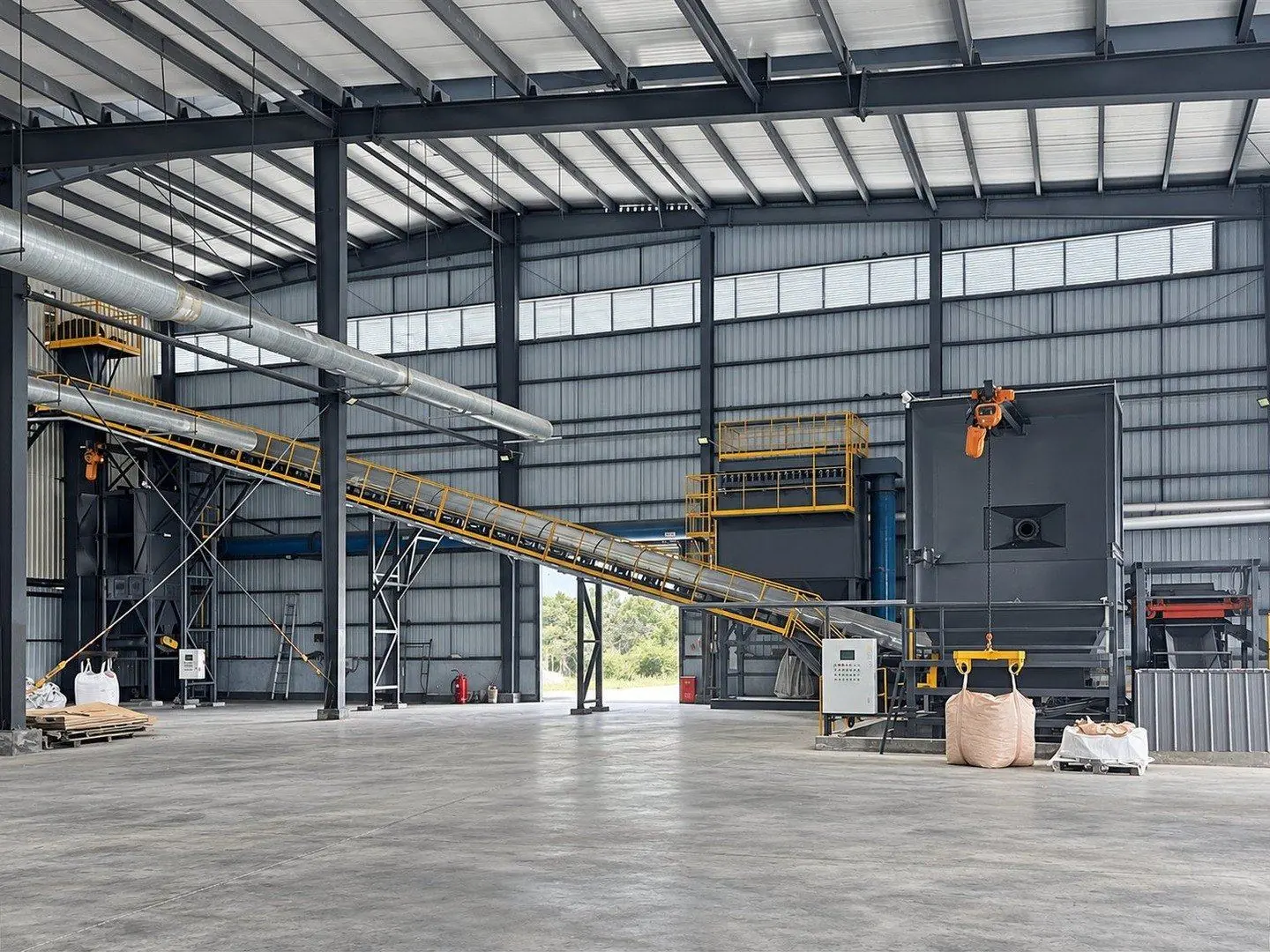
Receiving line with bulk bag station and inclined belt conveyor
Receiving line, Guangdong · photo

From our drawing office

Every line is drawn for its site

General-arrangement drawings from our design office, redrawn for the web. Silos, steel, conveyor routes and dust collection are laid out around each customer’s material, rate and building.

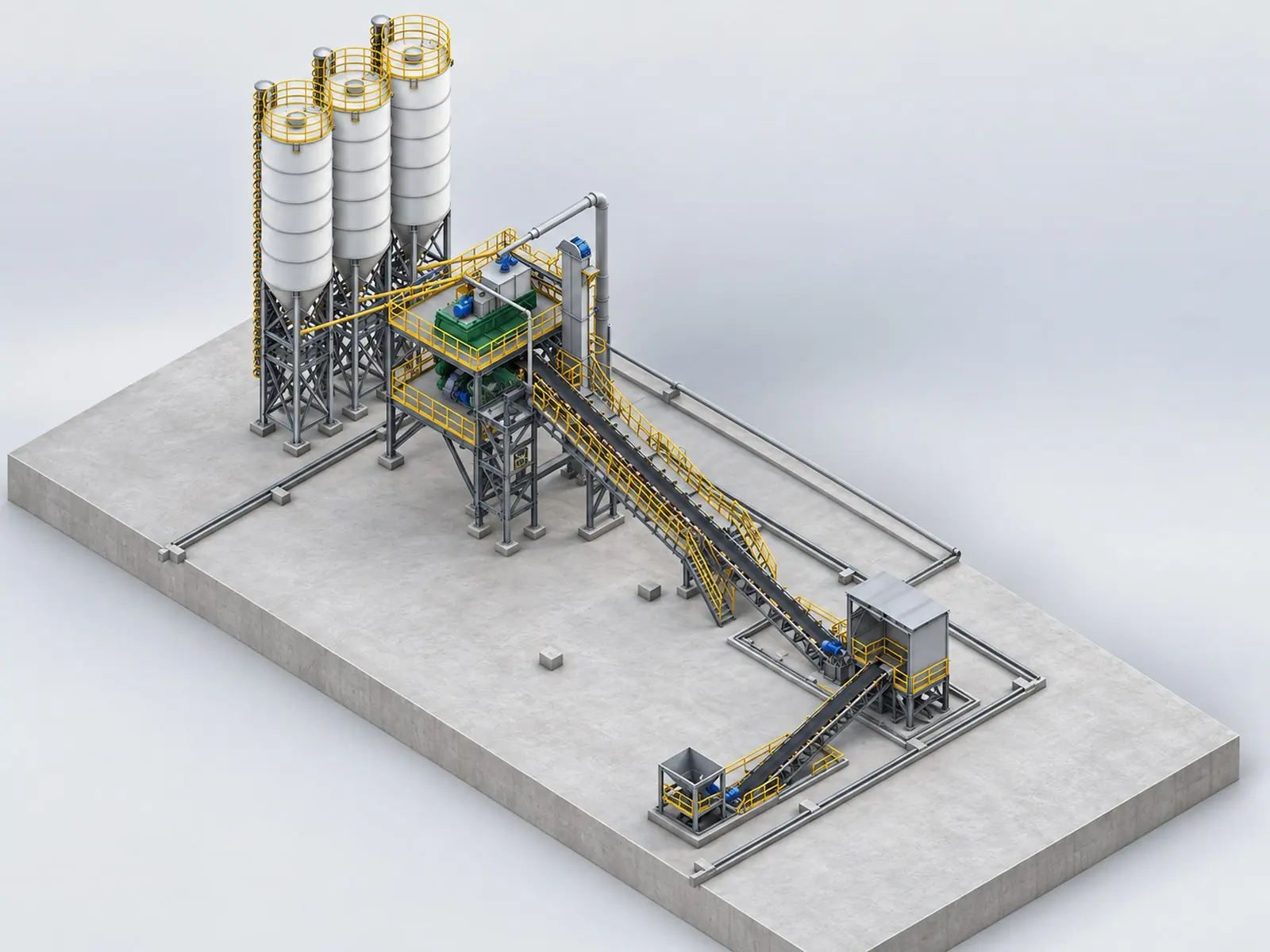
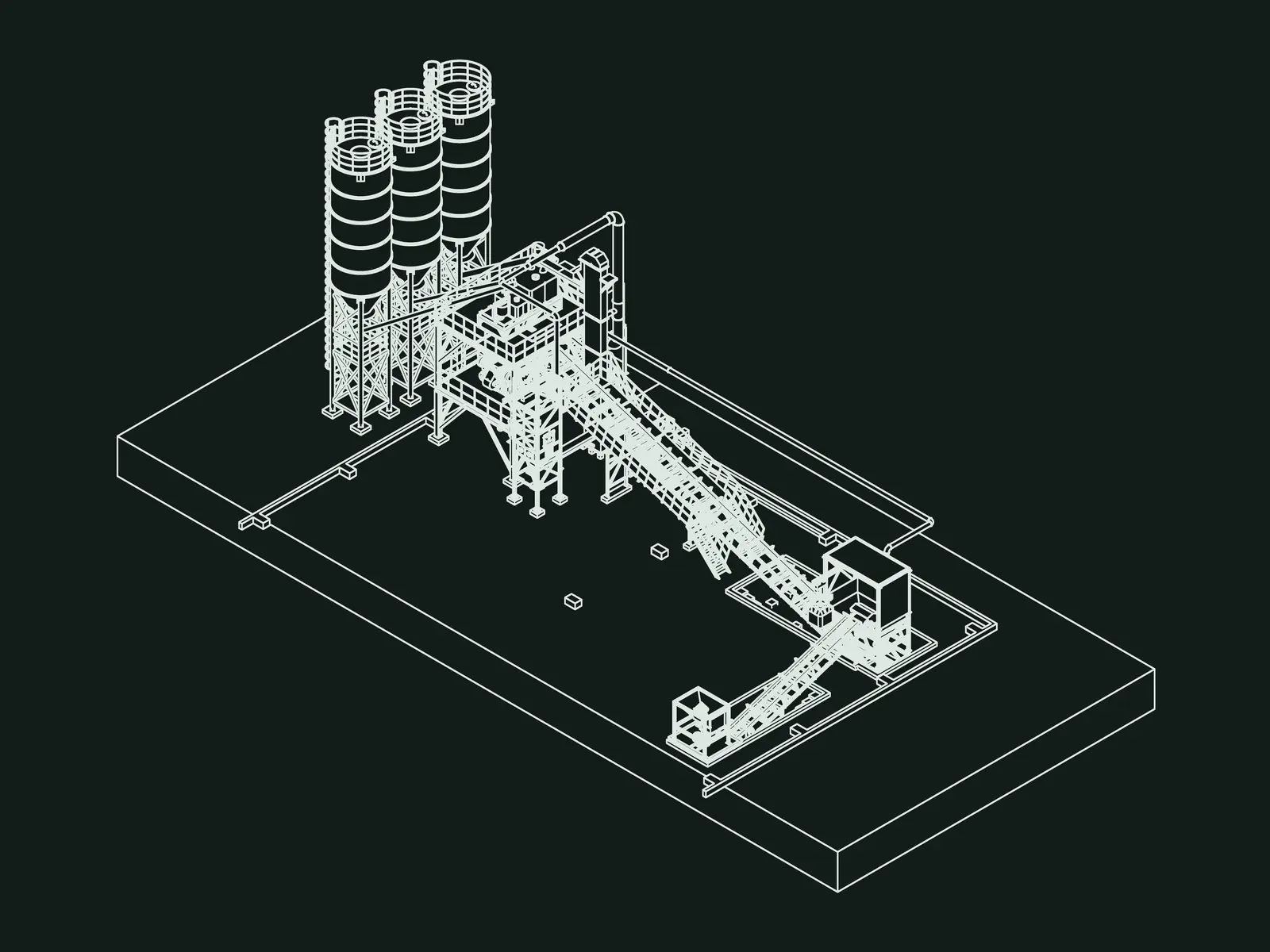
Rendering of the 3000 L hazardous-waste line, made from our general-arrangement drawingIsometric general arrangement: 3000 L hazardous-waste line, Shanxi, China

Shanxi, China · drawing and a rendering made from it

3000 L hazardous-waste line

32.4 × 18.1 m · 17.7 m high

Three powder silos, bag unloading and a waste storage hopper, a crusher, a long belt up to the mixing tower, a bucket elevator and one central dust collector.

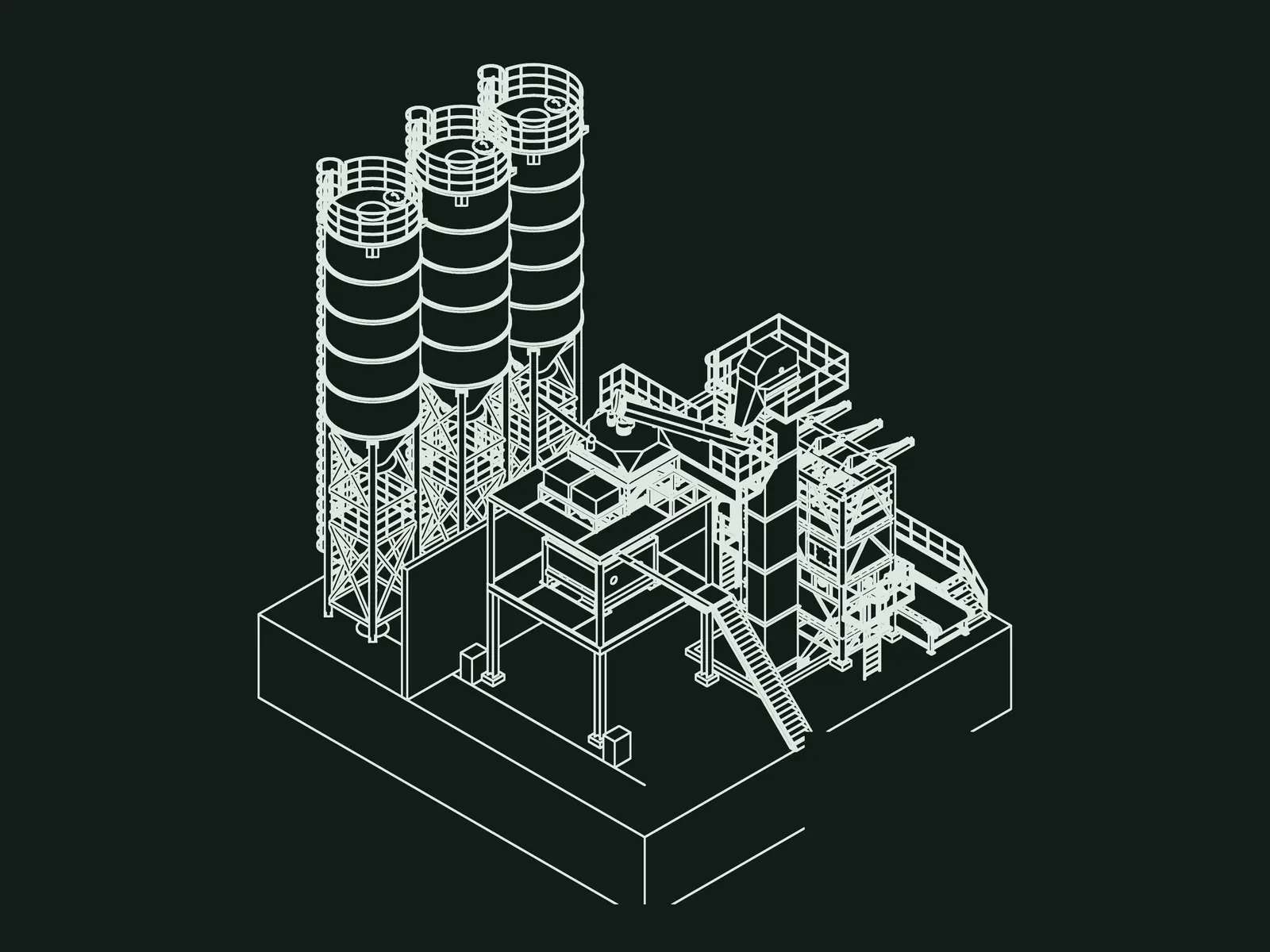
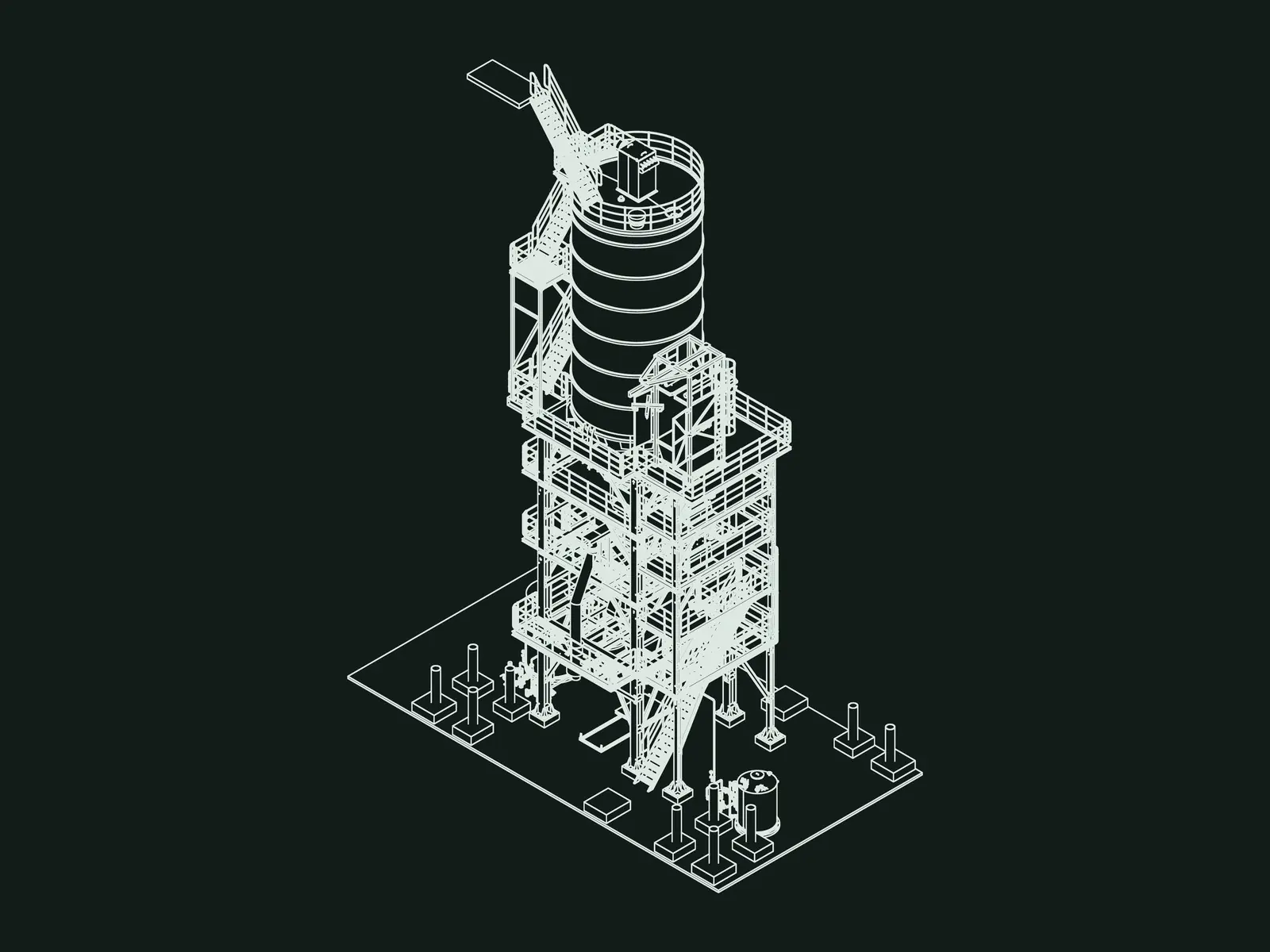
Isometric general arrangement: 4000 L hazardous-waste line, Guangdong, China

Guangdong, China · drawing

4000 L hazardous-waste line

16.3 × 16.4 m · 11.8 m high

Three silos beside the tower, a multi-station bag unloader, and a bucket elevator lifting from a 3 m pit.

Isometric general arrangement: Fly ash tower with a 200 m³ silo, Guangxi, China

Guangxi, China · drawing

Fly ash tower with a 200 m³ silo

28.2 m high

The silo sits on a four-level tower. Two-stage crushing for secondary chelation, bulk loading and bagging, and a control room.

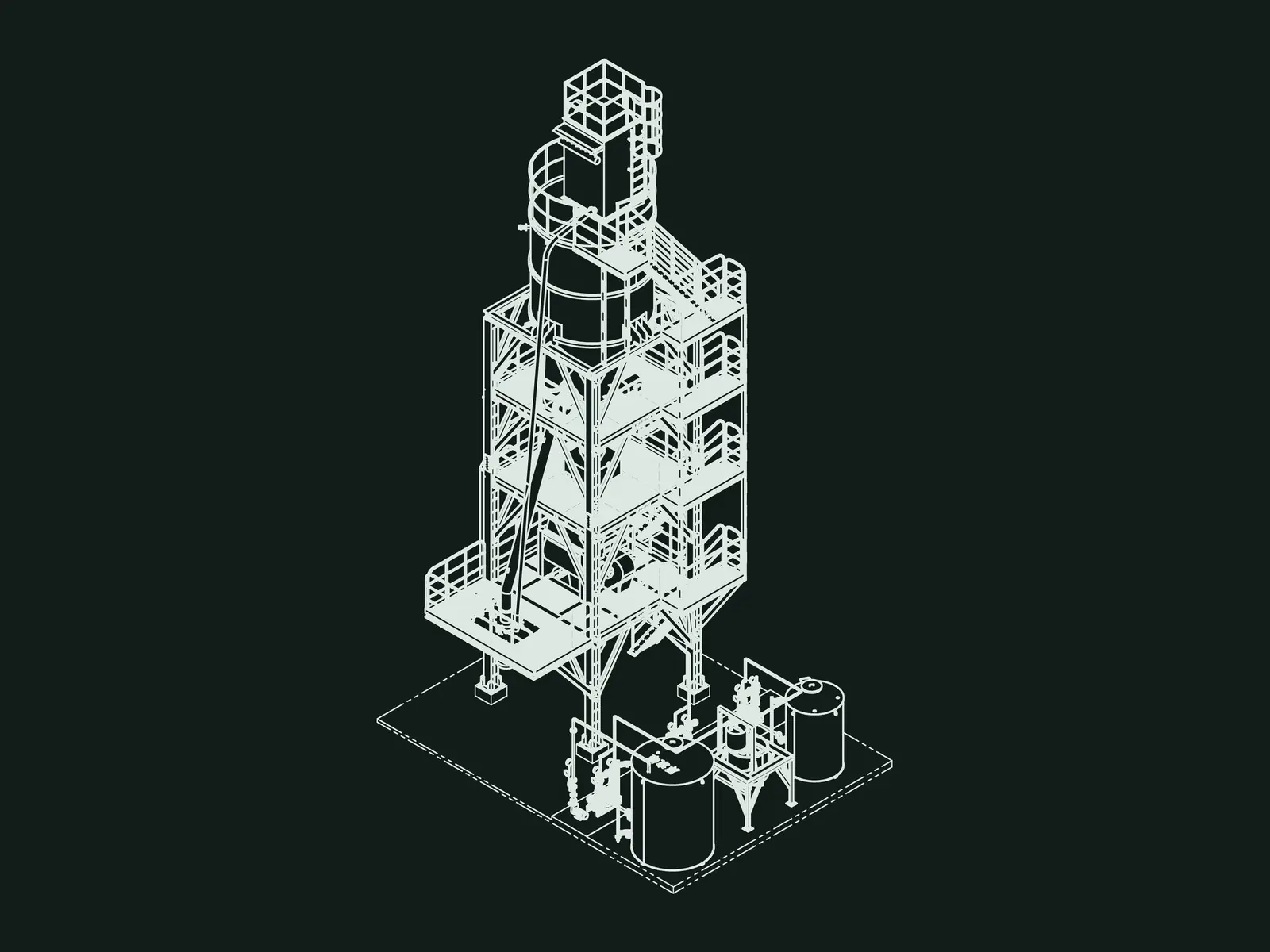
Isometric general arrangement: 750 L fly ash line, Qinghai, China

Qinghai, China · drawing

750 L fly ash line

11.7 × 6.2 m · 19.5 m high

A 50 m³ silo on the tower, a tall bucket elevator, a separate reagent skid, and bagging with a bulk-bag trolley.

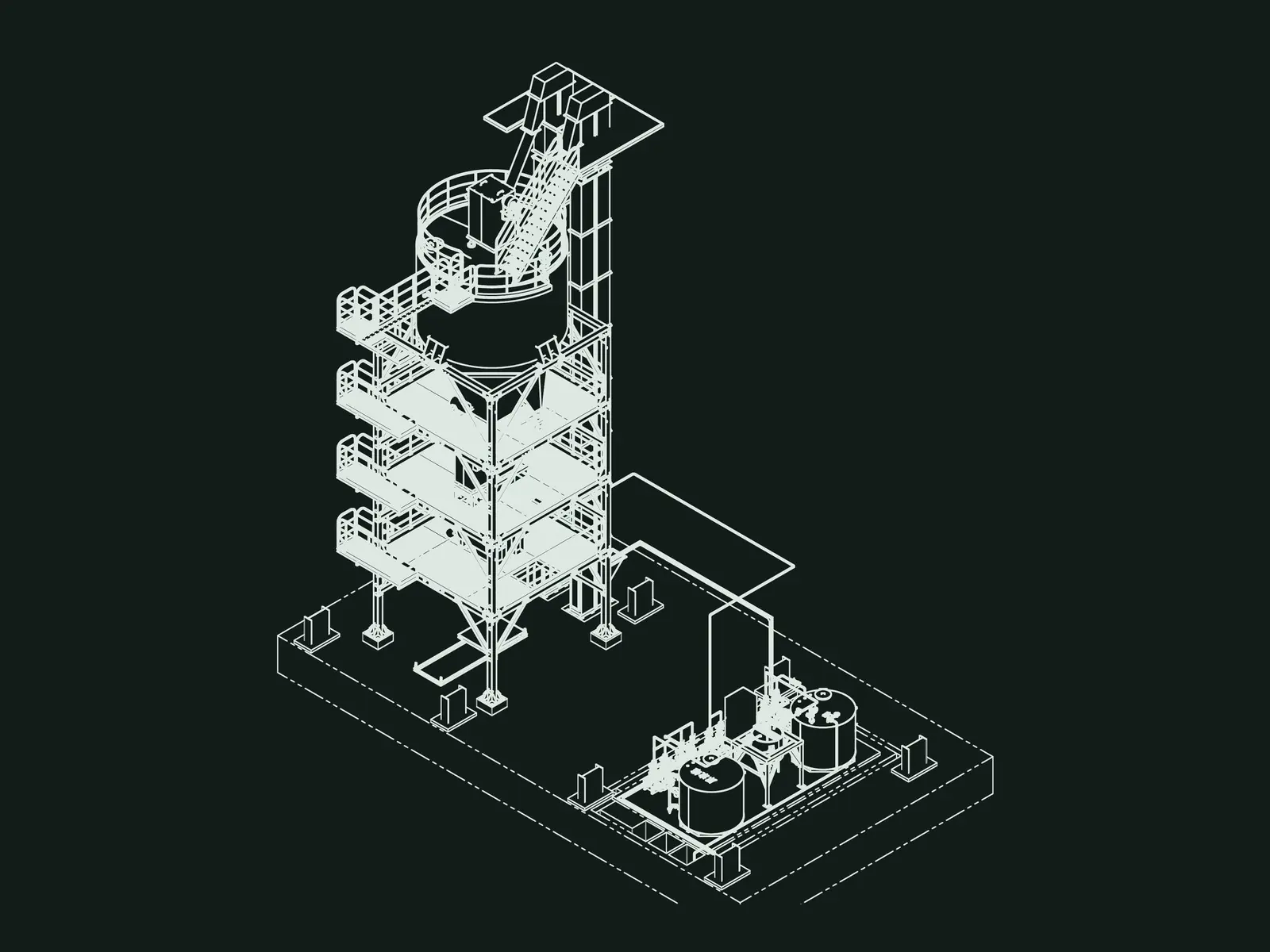
Isometric general arrangement: 500 L compact fly ash line, Heilongjiang, China

Heilongjiang, China · drawing

500 L compact fly ash line

8.9 × 7.0 m · 18.0 m high

A 20 m³ silo over four levels on a 3.5 m square frame, a reagent skid beside it, and a bulk loader underneath.

Complete sections

Built as one section

Fly ash stabilization lines

  1. Ash silo
  2. weighing
  3. chelating agent make-up and dosing
  4. water
  5. twin-shaft mixing
  6. discharge, bagging or truck loading

From compact stations built around a 150 L mixer for a ton or two a day, up to lines of several tonnes an hour. Also retrofits: a new line under an existing ash silo.

See a retrofit case
How big a mixer?

Hazardous-waste stabilization lines

  1. Cement, lime, ash and waste
  2. weighing of each
  3. reagent and water
  4. mixing
  5. forming and curing

The same mixer handles general hazardous waste, and fly ash on its own.

Washing front end: bag emptying and slurry preparation

  1. Bulk-bag lifting
  2. enclosed emptying
  3. lump breaking
  4. buffer
  5. variable-rate feeding
  6. weighing screw
  7. elevation
  8. slurry tank
  9. slurry pump

The front end for a fly ash washing plant: turning bulk-bag ash into a steady slurry feed. The washing and salt-evaporation plant itself is outside our scope.

Two ways to start