What bag sizes can the station take?
The station described here takes 1 to 1.2 t bags with a bottom spout, lifted by a 2 t electric hoist. Other bag types and weights are configured for the job.
Equipment / Bulk bag unloading
Also called FIBC dischargers or big bag emptying stations. The bag is lifted into an enclosed chamber, opened and massaged empty. Dust is drawn off on the spot, and the material drops into a buffer hopper that feeds the next step at a set rate.
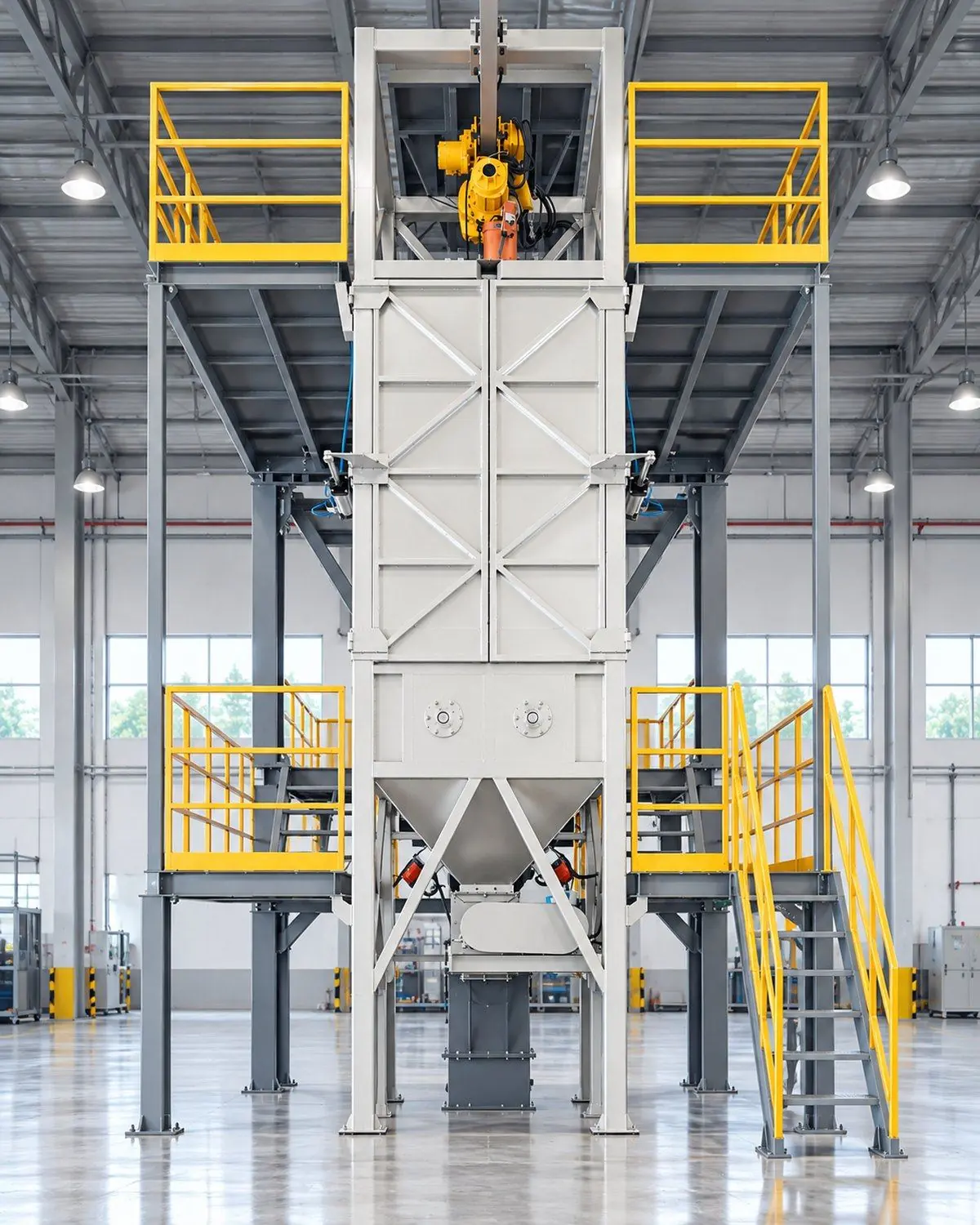
The hard part of a bulk bag isn't opening it. It's the dust when it opens, the material left in the bag, and the bridging in the hopper afterwards.
The configuration below was written for sodium bicarbonate: a fine powder that bridges once it picks up moisture, 8–12 bags a day, running around the clock. Bulk-bag fly ash follows the same approach, with a crusher added under the hopper.
How it runs
Example 1 · sodium bicarbonate
Mounted on the back of the bag chamber. What it catches goes straight back into the buffer hopper instead of being thrown away.
2.2 kWFour aeration pads, an agitator and a rapper, for fine powders that bridge after picking up moisture. Level switch and sight glass included.
1.5 m³ · 4 mm polished 304 stainlessRotary valve on a VFD, local or remote. DCS-ready: remote start/stop, speed set-point, speed and current feedback.
B200 · max 600 kg/h · 4–20 mAExample 1 · sodium bicarbonate
| Overall size | 1700 × 1700 × 8775 mm (total height from base to top of the hoist frame, including hopper, bag chamber and lifting frame; height adjusted to your building) |
|---|---|
| Bag | 1–1.2 t, bottom spout |
| Hoist | 2 t electric hoist, wireless remote |
| Buffer hopper | 1.5 m³, 304 stainless |
| Discharge | B200 rotary valve, VFD, max 600 kg/h |
| Dust collector | Back-mounted, 2.2 kW |
| Compressed air | 0.3–0.7 MPa, ≤ 0.6 m³/min |
| Power | 380 V 50 Hz standard; other voltages and 60 Hz to order |
| Control box | 304 stainless, IP65, wall-mounted |
| Materials | Hopper 304 stainless; frame Q235, two primer and two top coats, ≥ 100 μm |
| Also supplied | Platform, guard rails, ladder, manual slide gate, clear flexible connector |
One unit, configured for sodium bicarbonate; 600 kg/h is this unit's discharge rate. Other materials, bag types and rates are configured for the duty.
Example 2 · fly ash in bulk bags
Bulk-bag fly ash often arrives caked. The same bag chamber gets a crusher underneath and a second buffer hopper, to keep the outlet clear. A cross-blade cutter can open the bags. Rate and output size are set for your ash and the machine it feeds. See crushers
Example 3 · hazardous waste in bulk bags
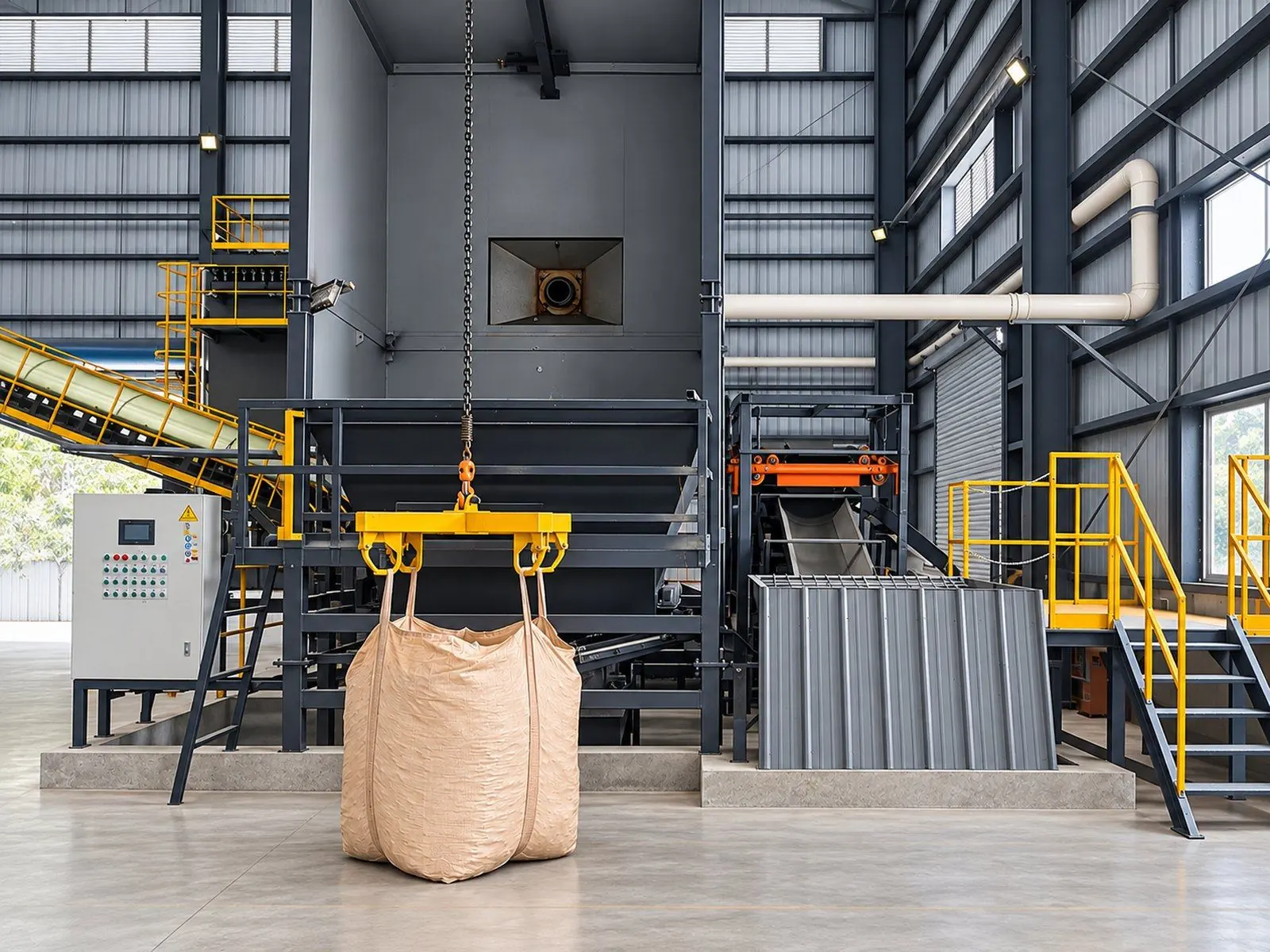
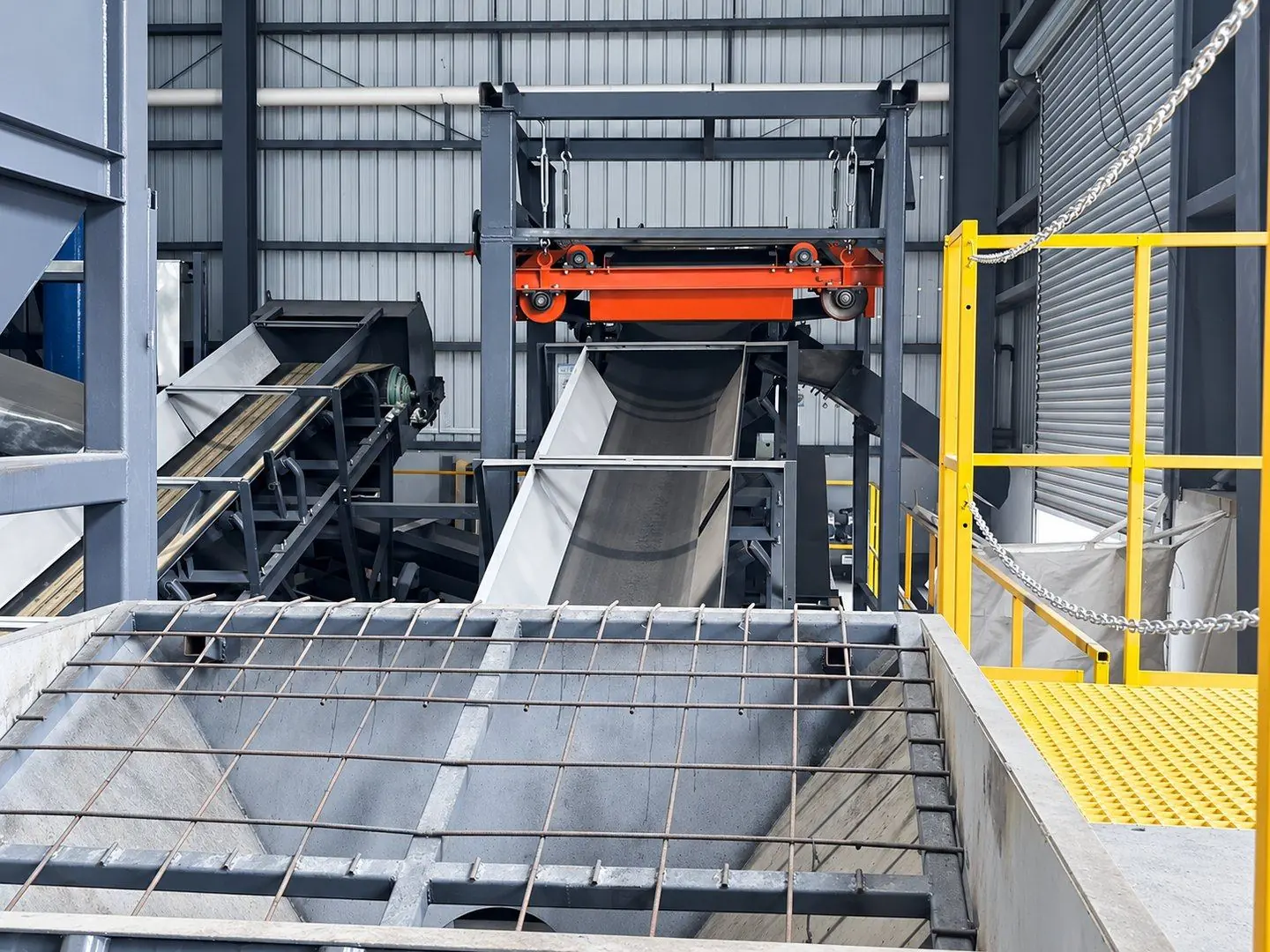
The receiving end of a hazardous-waste solidification workshop, also ours. An electric hoist and a spreader bar carry each bag by all four loops into the enclosed chamber. A grated hopper beside it takes loose material. Both drop onto belt conveyors, and an overband magnet above the belt picks out tramp iron.
On video
The hoist brings the bulk bag into the enclosed station, where it empties into the hopper below while the filter on the station draws off the dust.
Questions buyers ask
The station described here takes 1 to 1.2 t bags with a bottom spout, lifted by a 2 t electric hoist. Other bag types and weights are configured for the job.
The bag is opened inside a closed chamber through a hand port. A collector on the back of the chamber draws off the dust, and what it catches drops straight back into the buffer hopper.
Yes. For powders that bridge once they pick up moisture, the buffer hopper gets aeration pads, an agitator and a rapper, and a rotary valve feeds it out at a set rate.
The example unit stands 8775 mm from base to the top of the hoist frame. The height is adjusted to your building.
A lump breaker goes under the bag hopper with a second buffer hopper, so caked material can’t block the outlet.
Yes. Remote start and stop, feed-rate set-point, and speed and current feedback over 4–20 mA.
Next step