What mixer capacity can you provide?
Our twin-shaft mixers cover 60–3,000 L batch discharge capacity. Larger capacities are designed for the operating conditions.
Industries / Other powder applications
Building materials, mineral powders, water treatment chemicals and battery raw materials use the same steps we build every day: bag unloading, conveying, weighing, twin-shaft mixing and dust collection. Tell us your material and we will engineer the line around it.
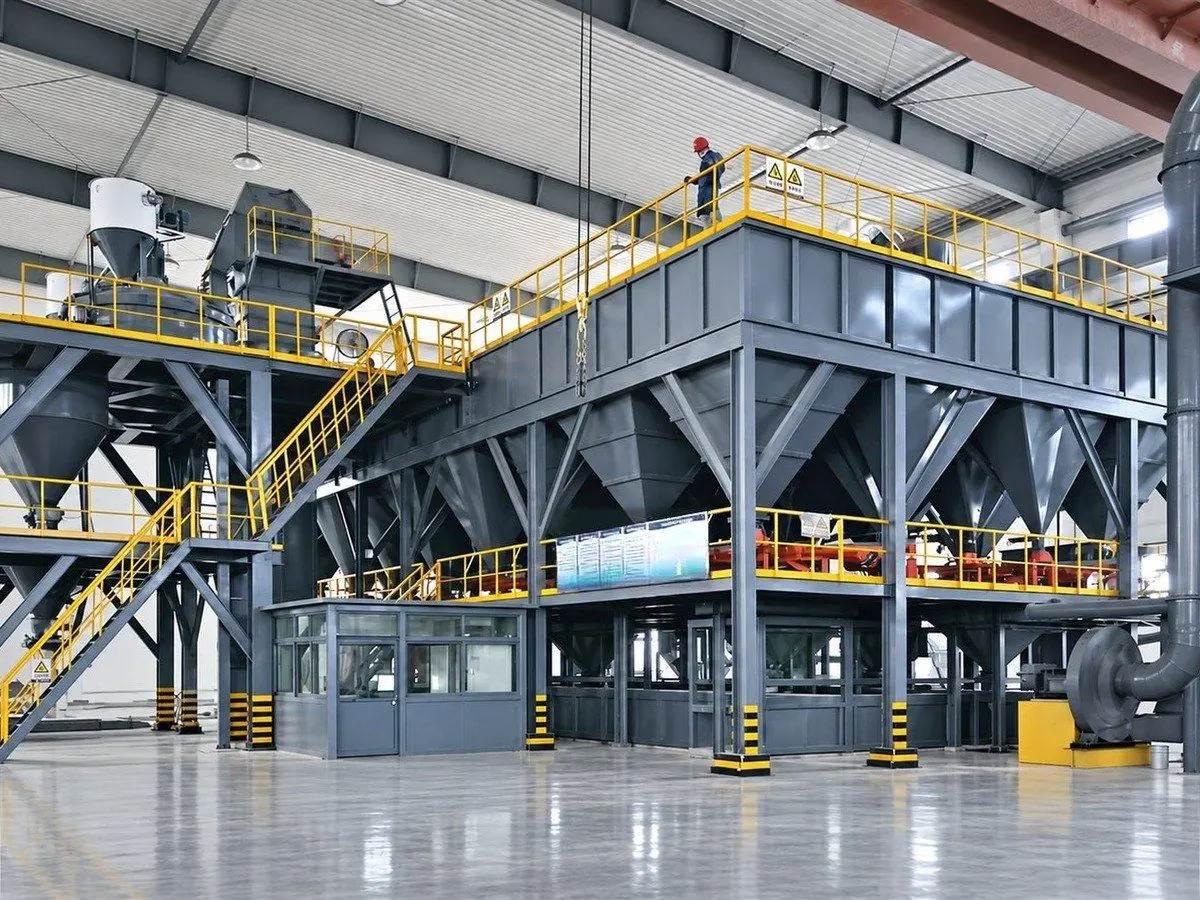
New materials are welcome. They are often where our engineering helps most.
We have not yet listed delivered projects in these industries, so we say so plainly. What carries over is the equipment and the engineering we have proven on fly ash and hazardous waste: dusty, sticky and abrasive powders, weighed to a recipe and mixed in batches.
Materials and what makes them hard
| Material | The problem | How we handle it |
|---|---|---|
| Cement (building materials) | Fine cement powder needs controlled transfer and dust management at feed points. | Use enclosed conveying and pulse-jet baghouse dust collection, with equipment and filter selection matched to the process. |
| Gypsum and lime (building materials) | Powder flow behavior and feed rates can differ between ingredients and must suit the batch sequence. | A weighing hopper, metering screw and PLC recipe control can be arranged to the required batch and process. |
| Mineral powders (minerals) | Fine mineral material may need enclosed transfer and controlled feed between storage and process equipment. | A route can combine screw conveyors, bucket elevators, vacuum conveying or belt conveyors with metering screws and rotary valves as required. |
| Tailings for backfill (minerals) | Backfill preparation may call for controlled proportions of solids and liquid within a defined batch sequence. | A system can use weighing hoppers, liquid scales and PLC recipe and batch records; accuracy is designed to the customer's technical requirements. |
| Hydrated lime (water treatment) | Lime powder can generate dust during bag discharge and transfer, while the process may require a controlled feed into slurry preparation. | A bulk bag unloading station with an enclosed discharge area and back-mounted dust collection can feed a metering screw and a customer-specified slurry preparation stage. |
| Powdered activated carbon (water treatment) | Fine powder needs controlled unloading and transfer to limit dust release and maintain a steady feed to the next process. | We can configure enclosed bulk bag discharge, metering screws, conveying equipment, and pulse-jet bag dust collectors around the required process flow. |
| Cathode and anode raw materials (battery materials) | Powders may require controlled discharge, transfer, and batching to match the process sequence. | We can configure bulk bag unloading, conveying, weighing hoppers, metering screws, and PLC recipe and batch-record functions to the customer’s technical requirements. |
| Lithium carbonate (battery materials) | The line must transfer and meter the powder in a way that fits the customer’s process and operating sequence. | A project-specific arrangement can combine enclosed bag discharge, metering, conveying, and mixing equipment, with dust collection at powder handling points. |
Equipment
Conveyors route powder from receiving and storage points to weighing and mixing equipment.
Weighing and PLC recipes coordinate multiple ingredients in each production batch.
A mixer combines the selected dry ingredients after the specified dosing sequence.
Dust collection controls powder released at transfer and charging points.
A supplied lump or hammer crusher can be included where material preparation requires size reduction.
A bulk bag station provides a contained point for unloading treatment powders.
A typical line
Dust extraction at every transfer point
The actual configuration follows your material, rate and site.
Our experience
These are engineering capabilities, not delivered references in these industries. For each enquiry we review the material, the recipe and the site before proposing equipment, and explosion protection, hygiene or metal-contamination requirements are confirmed item by item.
Questions buyers ask
Our twin-shaft mixers cover 60–3,000 L batch discharge capacity. Larger capacities are designed for the operating conditions.
Wear-part options are available for our twin-shaft mixers. We confirm the complete equipment arrangement after reviewing the material and operating duty.
The configuration depends on the materials and process. We review each powder and the required operating sequence before specifying the equipment.
No. Explosion protection and cleanliness requirements must be confirmed item by item for each project before the equipment configuration is defined.
Next step
Send the material and the process. Our engineers look at it first and come back with a proposed solution and configuration.