ZKSJECO

Equipment / Dust collection

Dust collection

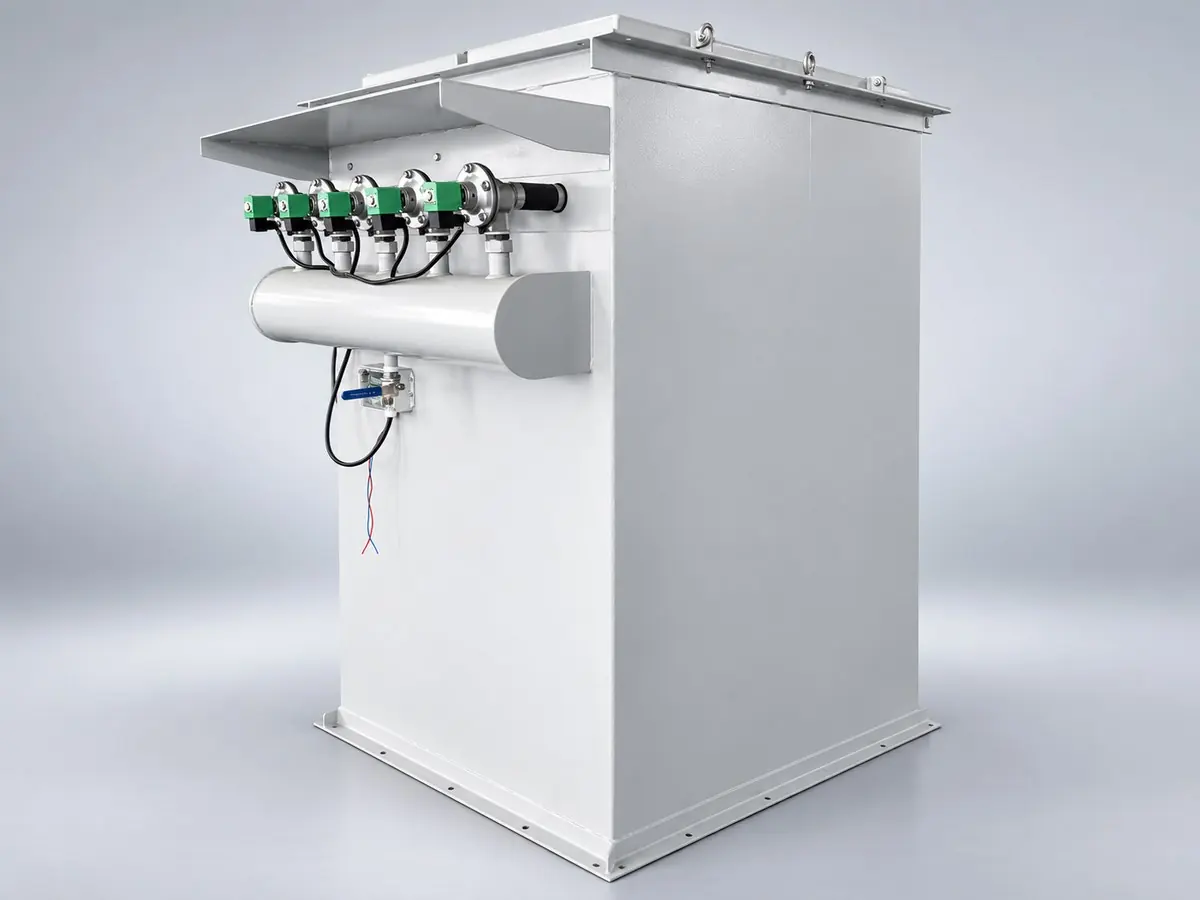
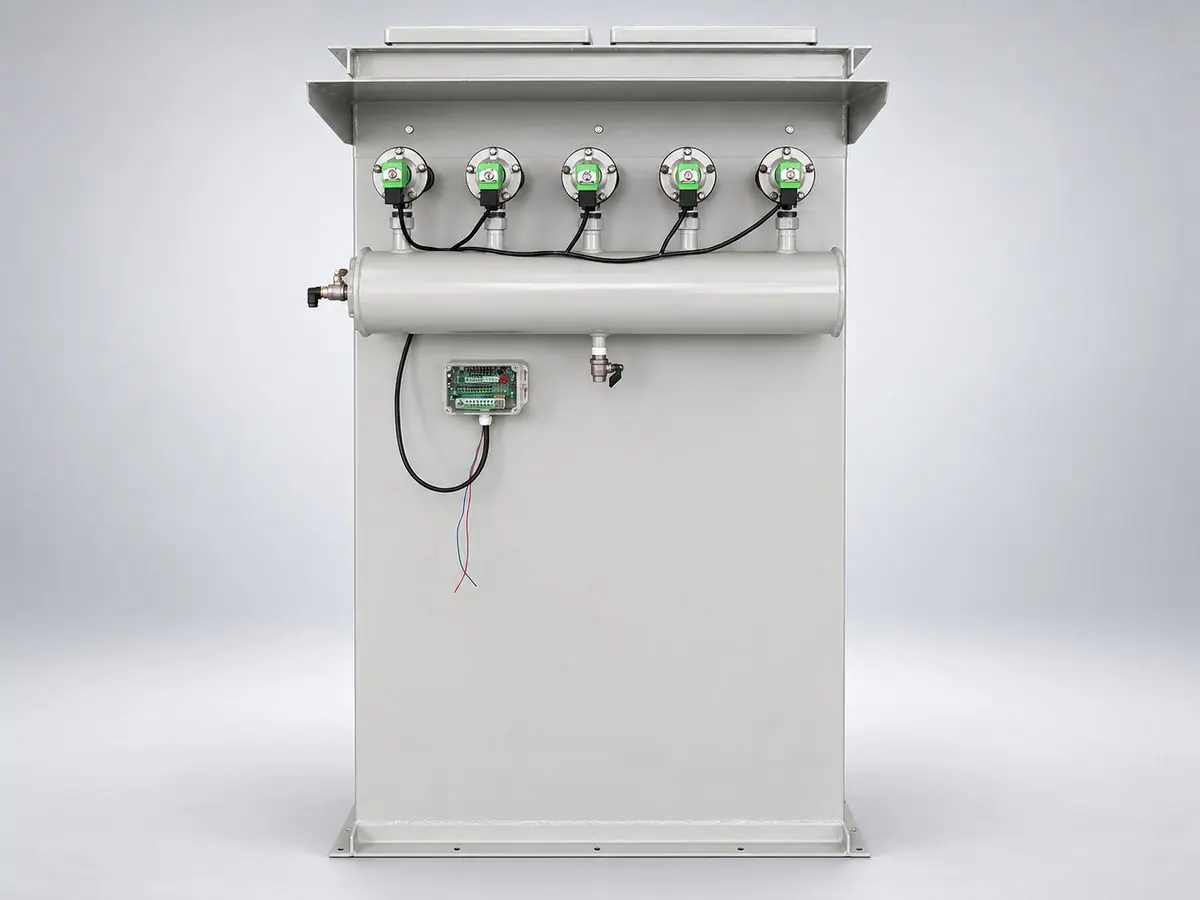
Extraction where the dust starts: the bag chamber, the weigh hoppers, the mixer inlet and transfer points. Pulse-jet bag filters, cleaned offline one compartment at a time.

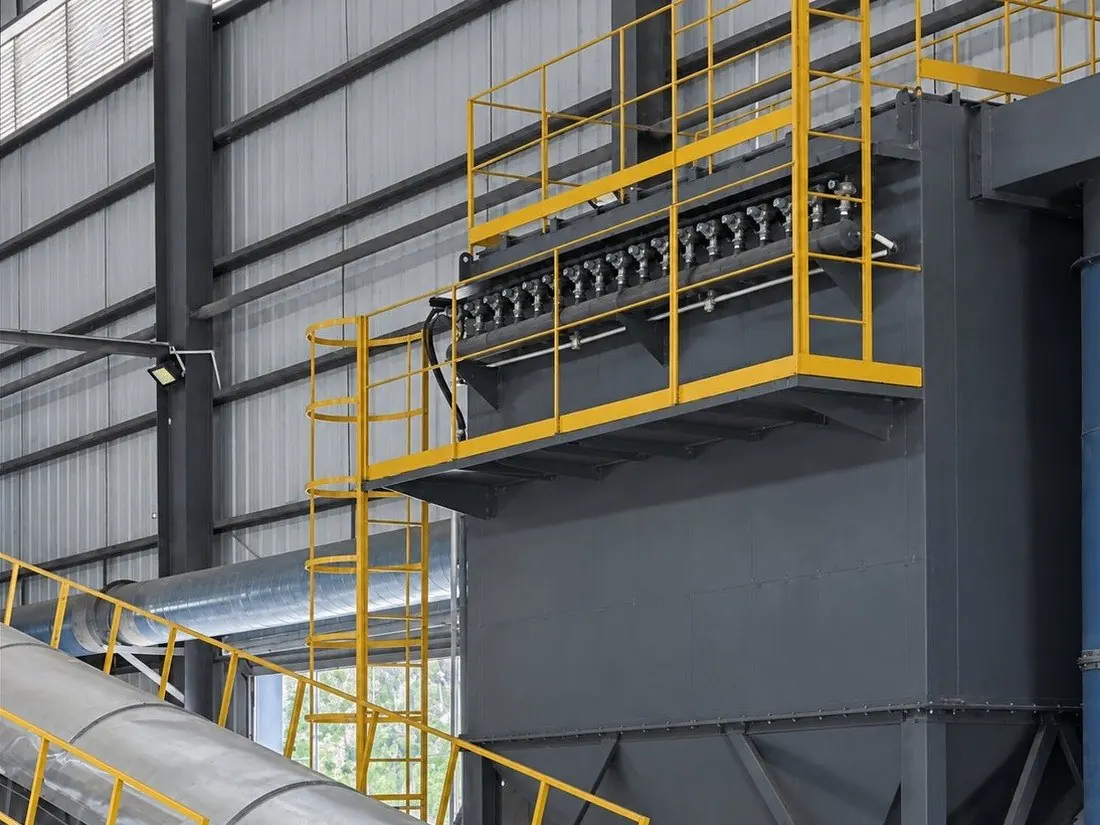
Large pulse-jet bag filter with a row of pulse valves under its yellow service platform
Large pulse-jet bag filter, Guangdong

Dust is easiest to catch right where it's made.

So each dusty step gets its own hood or connection: the bag chamber, each weigh hopper, the mixer. Ducts go to a local collector or to one central filter, and where the process allows, what's caught goes back into it.

Layouts

Three ways to connect it

On the station

  1. Bag chamber
  2. back-mounted collector
  3. dust back into the buffer hopper

On a bulk bag unloading station the collector sits on the back of the chamber, and the dust it catches drops straight back into the buffer hopper.

See bulk bag unloading

Through the mixer's filter

  1. Weigh hoppers + mixer inlet
  2. mixer exhaust
  3. main collector

The powder scales discharge into the mixer, and the mixer's exhaust goes to the dust system, so the dust from charging and mixing is filtered in one place.

To a central filter

  1. Mixer + ash scale
  2. ducts
  3. silo-top filter

In one retrofit, the mixer and the ash scale were ducted to the existing filter on the silo roof instead of adding another one.

Our bag filters

Five things in the design

  • 01

    An inlet that protects the bags

    Coarse and hot particles drop straight into the hopper before they reach the bags.

  • 02

    Long bags

    The same capacity on a smaller footprint, which helps in retrofits where floor space is short.

  • 03

    Offline cleaning by compartment

    Each compartment is shut off while it is pulsed, so less dust settles straight back onto the bags. Bags can be changed one compartment at a time while the system keeps running.

  • 04

    A tight casing

    Spring snap-band bag collars that are quick to change and seal well. Casing welds are leak-tested with kerosene to keep air leakage down.

  • 05

    PLC control

    Automatic pulse cleaning and dust discharge, temperature control and an over-temperature alarm.

Examples

From our projects

Bulk bag unloading stationBack-mounted collector, 2.2 kW; dust returns to the buffer hopper
Compact stabilization stationPulse-jet collector at the ash scale; feed-point collector designed for 800 m³/h
Mixer on a stabilization lineA simple bag filter on the mixer, made in our workshop
Washing front endHoods on the back of the bag unloader and on top of the slurry tank, enclosed conveying everywhere else; 60 m of horizontal ductwork

Questions buyers ask

FAQ

What outlet dust level can you reach?

With PTFE-membrane filter bags our collectors are designed for outlet dust below 10 mg/Nm³. The guaranteed figure is confirmed against your dust data and the limit in your permit.

Can you connect to a filter we already have?

Yes. On one retrofit the mixer and the ash scale were ducted to the existing filter on the silo roof instead of adding another one.

Can bags be changed while the plant runs?

Yes. Cleaning and bag changes are done one compartment at a time while the rest keeps running.

What happens to the collected dust?

Where the process allows, it goes back into the process, for example into the buffer hopper of a bag unloading station.

Can you handle combustible dust?

Activated carbon, starch, coal dust and the like need an explosion-risk assessment first.

What warranty and after-sales service do you give?

A 12-month warranty on manufacturing faults, spare parts in stock for the life of the machine, 24-hour technical support, and engineers who supervise installation, commission the equipment and train your staff on site.
Two ways to start