Silo to scale
- Ash silo
- rotary valve
- screw conveyor
- weigh hopper
- mixer
A common retrofit: keep the existing ash silo and add a screw, a scale and a mixer underneath.
See a retrofit caseEquipment / Conveyors and feeders
Screw conveyors, rotary valves, bucket elevators, vacuum conveyors and belt conveyors, moving powder between silos, scales and mixers. Enclosed wherever dust would get out.
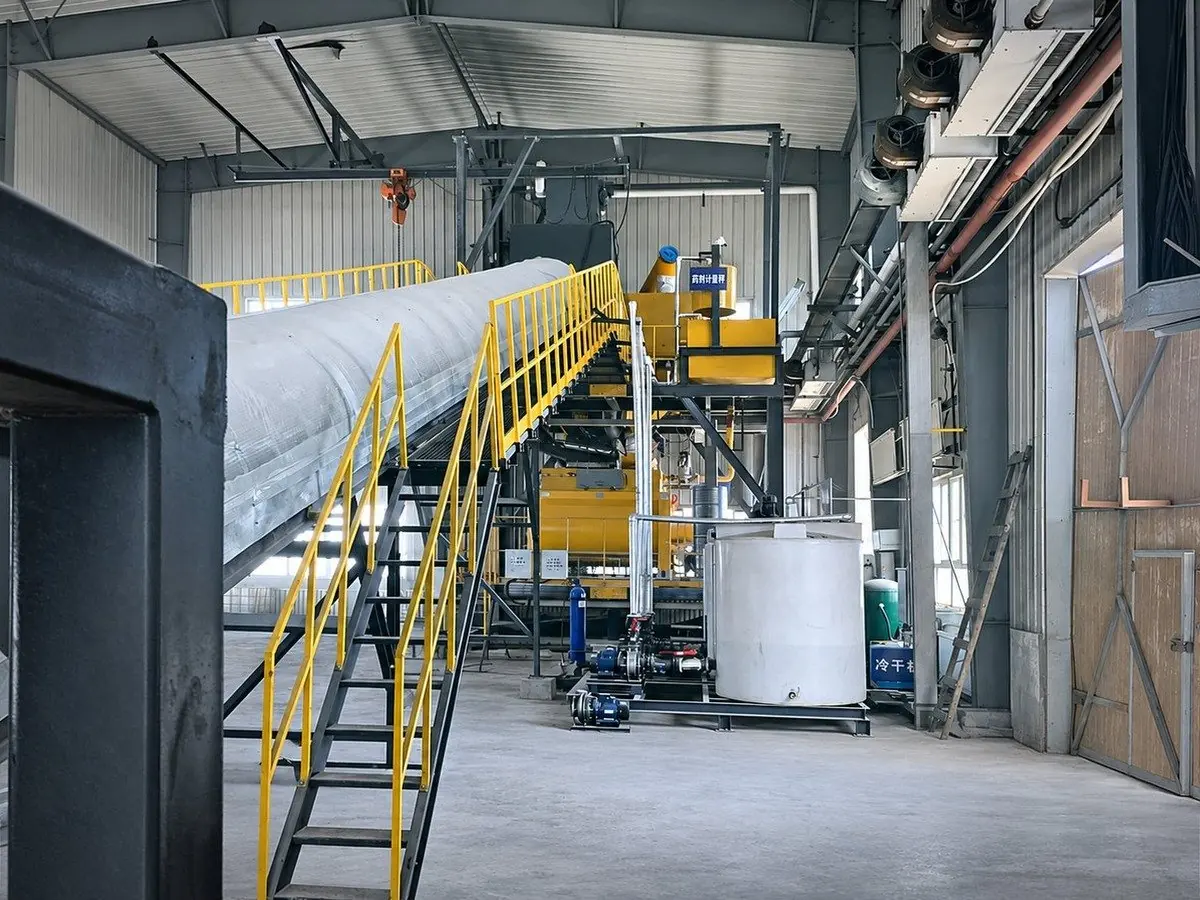
Fly ash is fine, sticky and abrasive. It bridges in hoppers, packs in screws and wears the flights away.
So conveyors are chosen for the material, not from a catalogue: manganese-steel screw flights where it wears, steep screws where there's no room for a long run, heat tracing where the ash mustn't pick up moisture, and slide gates where a blockage may need clearing.
What we supply
Fully enclosed, between silos, scales and mixers. Manganese-steel flights for abrasive material. They can run steep: one retrofit needed more than 40° to fit under an existing ash silo.
Manganese-steel flights · inclines above 40°Rotary valves under silos and hoppers, made in our workshop. Variable-speed star feeders where the process sets the feed rate, and three-way diverters where one silo feeds two lines.
300 × 300 and 400 × 400 mm · VFDZ-type bucket elevators to lift powder where a screw would have to be too long.
Example: about 3 t/hVacuum conveyors for compact stations and bag emptying. Bulk ash can also reach the silo from a pneumatic pump or a bucket elevator.
Example: vacuum conveyor ≥ 200 kg/hDischarge belts that carry the mixed product to bagging, trucks or forming, and long inclined belts with a walkway on receiving lines. An overband magnet above the belt can pick out tramp iron.
Example: 400 mm belt, 3 kWManual and electric slide gates for maintenance, flexible connectors and needle-felt expansion joints. Electric heat tracing and insulation where the ash has to stay hot.
Example: tracing to 170 °C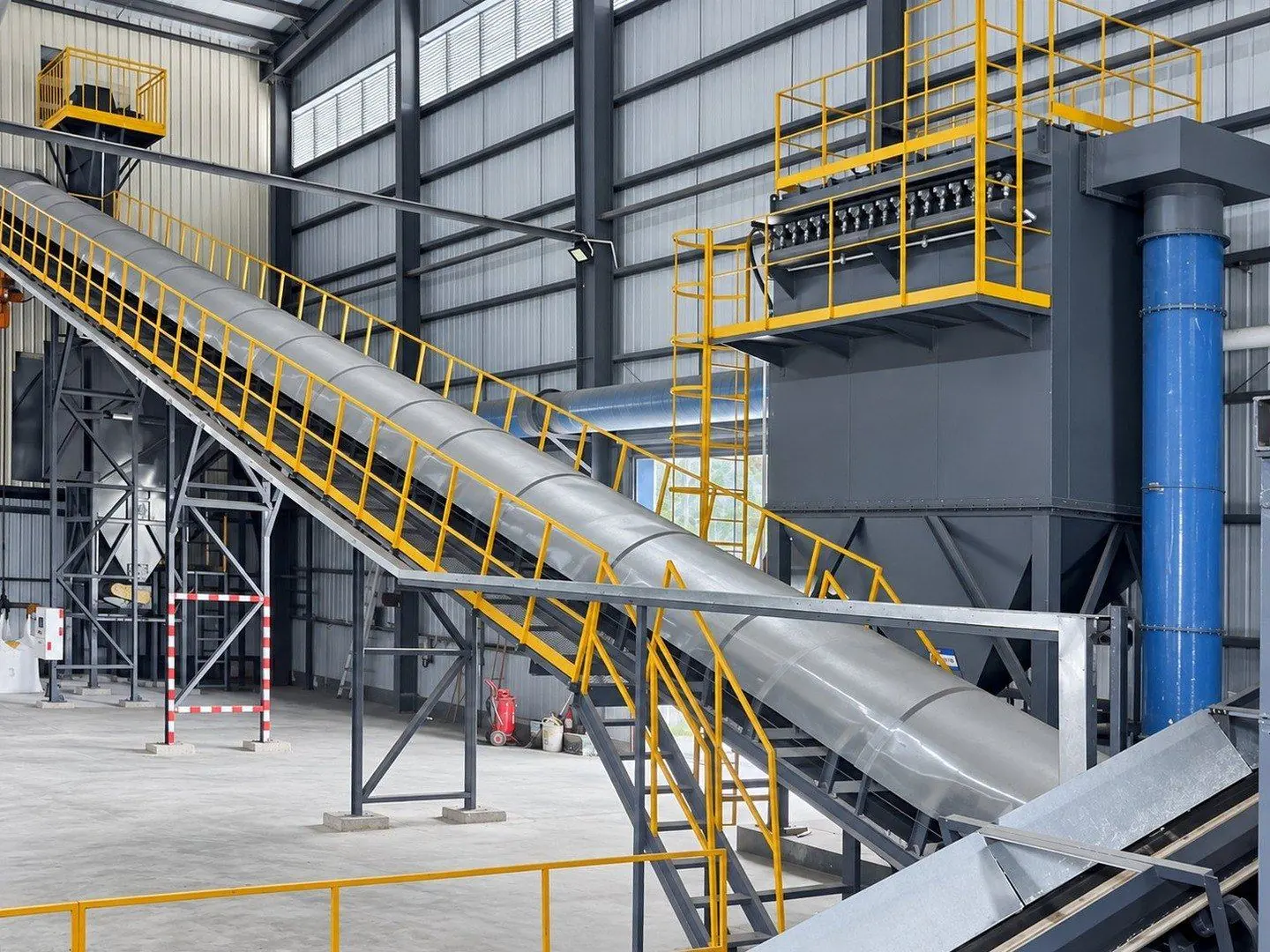
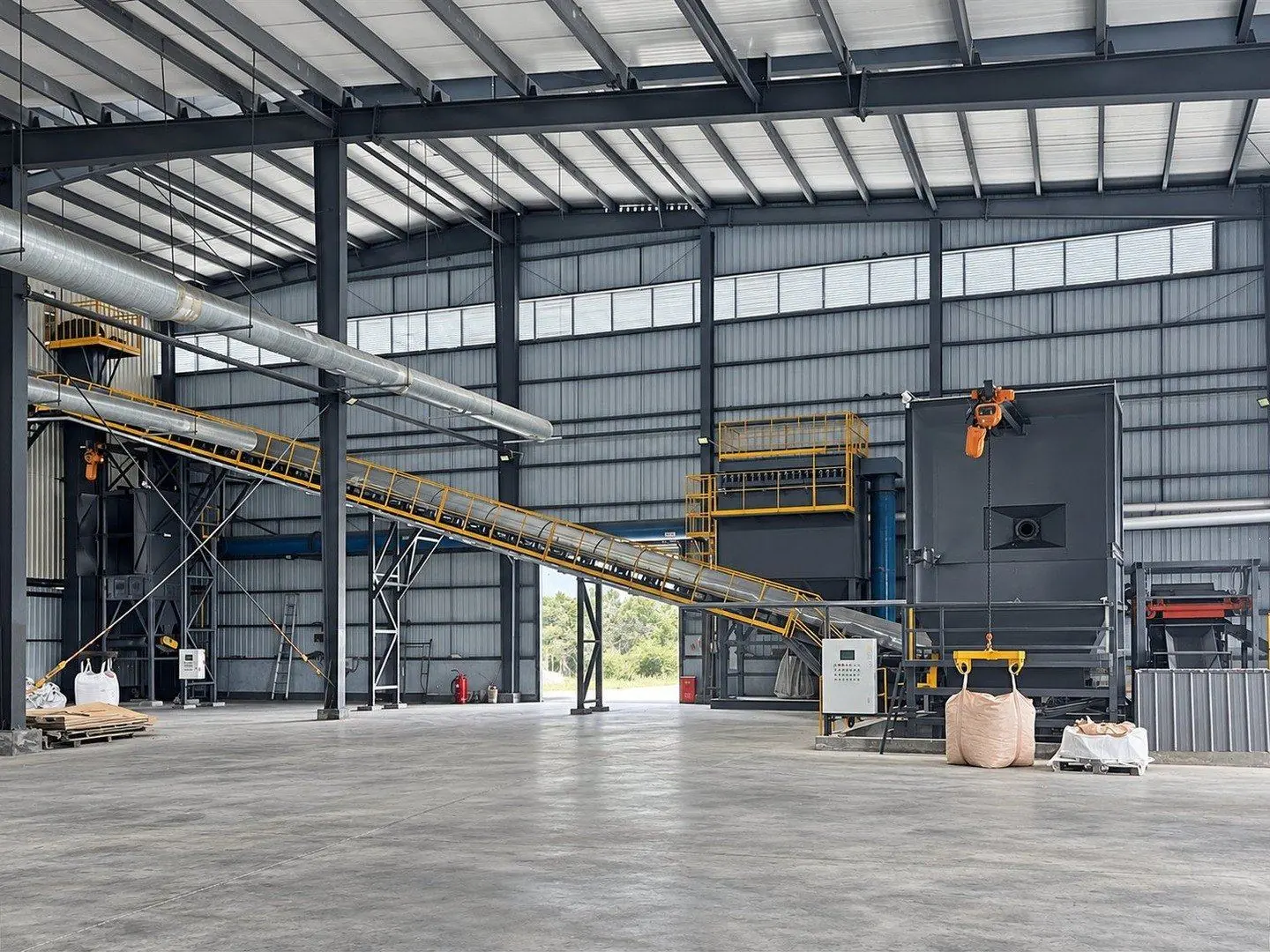
Where they sit in a line
A common retrofit: keep the existing ash silo and add a screw, a scale and a mixer underneath.
See a retrofit caseThe front end of an ash washing plant, turning bulk-bag ash into a steady slurry feed. The washing and salt evaporation themselves are outside our scope.
Clearance under the mixer and the belt route are set by the ceiling height and the vehicles on site.
Questions buyers ask
Steep. On one retrofit a screw ran at more than 40° to fit under an existing ash silo.
Screw flights are manganese steel where the material wears, and the conveyor is chosen for the material rather than from a catalogue.
Slide gates where a blockage may need clearing, heat tracing where the ash must not pick up moisture, and variable-speed feeders so the rate stays steady.
Rotary valves are made in our workshop, for example 300 × 300 mm and 400 × 400 mm, on a VFD where the feed rate matters.
Not without an explosion-risk assessment first.
A 12-month warranty on manufacturing faults, spare parts in stock for the life of the machine, 24-hour technical support, and engineers who supervise installation, commission the equipment and train your staff on site.
Next step