How accurate is the weighing?
We size the scales, feeders and gates to the figures in your specification. A recent tender asked for fly ash within 1.5 % and reagent and water within 1 %.
Equipment / Dosing and weighing
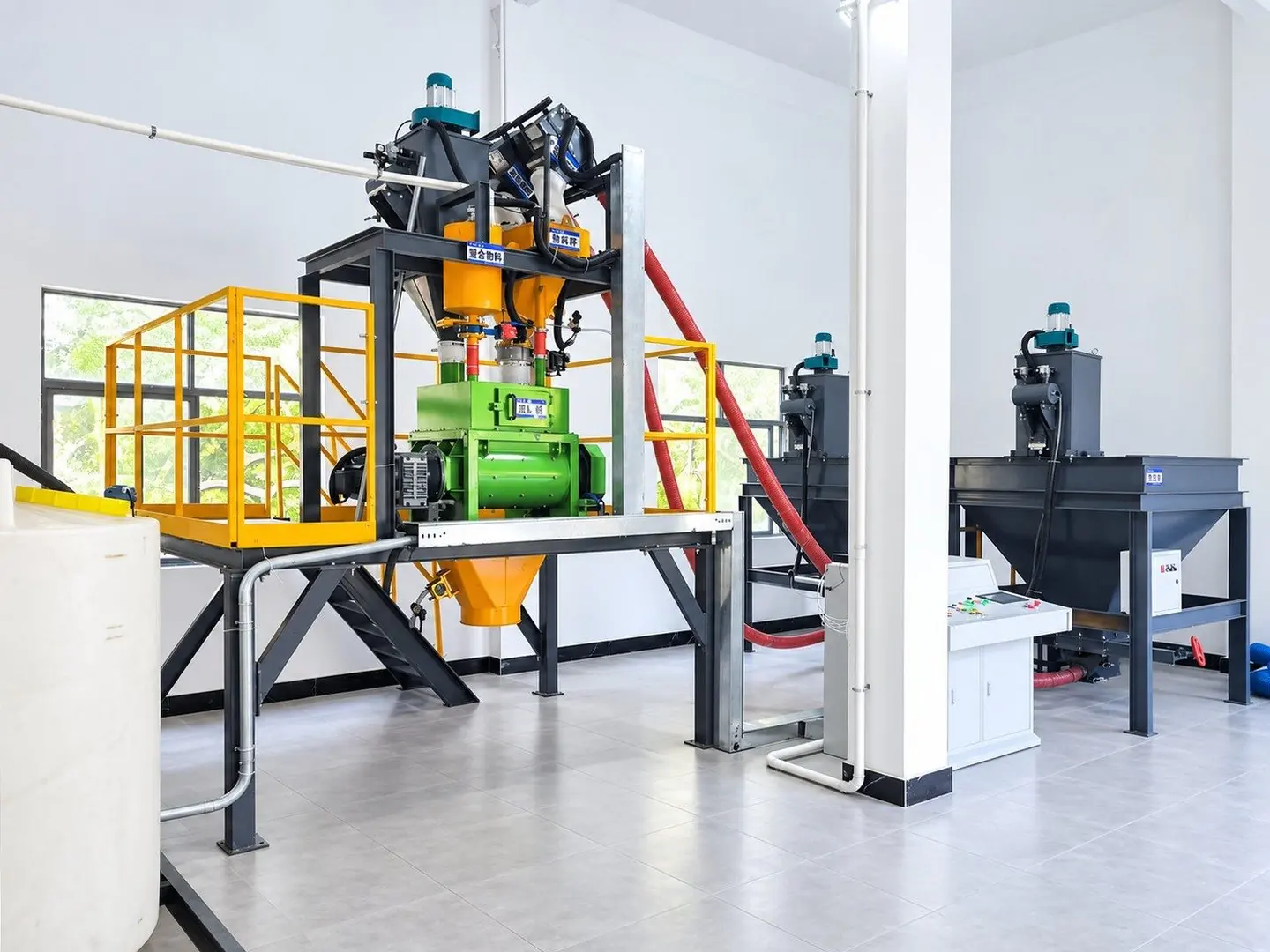
Each ingredient is weighed on its own scale, then released into the mixer as one batch. Powders in weigh hoppers on load cells, reagent and water in liquid scales, all run from a recipe on the PLC.
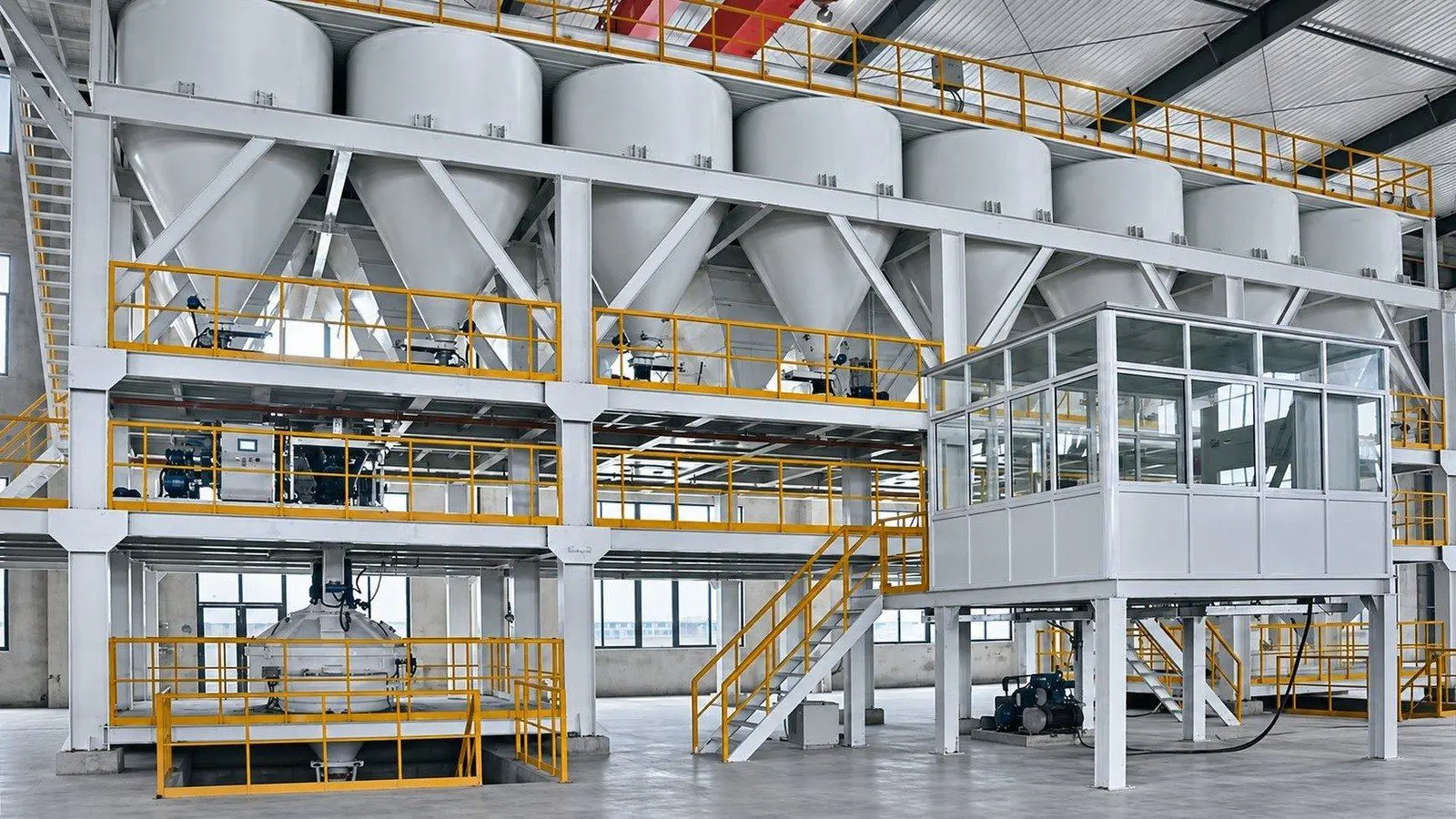
A stabilized batch is only as good as the ratio that went into it.
Reagent is dosed as a share of the ash weight, so the ash has to be weighed first, and weighed right. Scales, feeders and the recipe are designed together with the mixer's batch size and cycle time.
How a batch is weighed
What goes into it
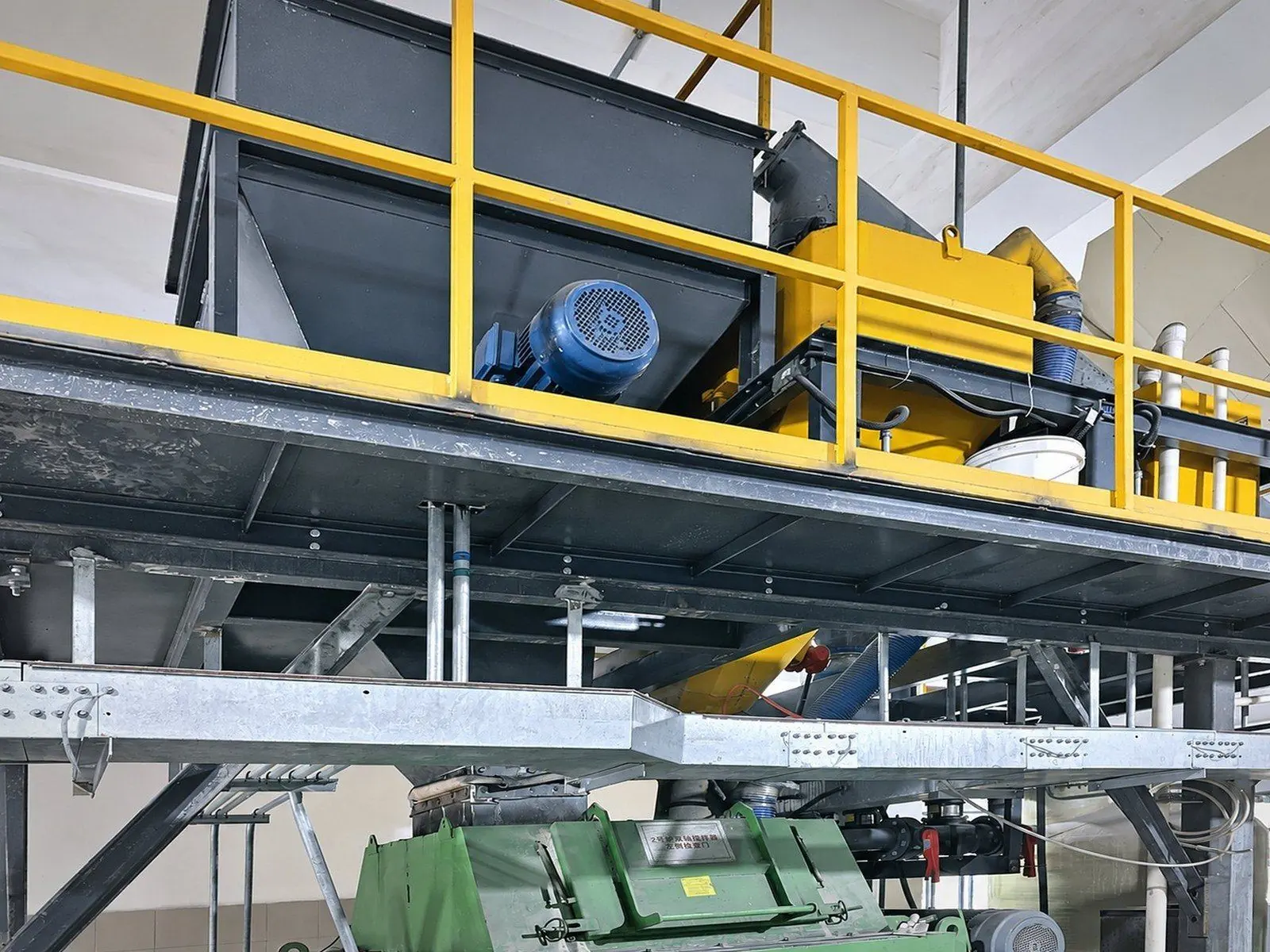
Carbon steel, primed inside against corrosion, with a discharge gate and a dust connection. Loss-in-weight versions where a feed rate has to be held.
Examples: fly ash 1.5 m³ · cement 0.5 m³304 stainless hoppers with a pneumatic discharge valve, for reagent solution and water.
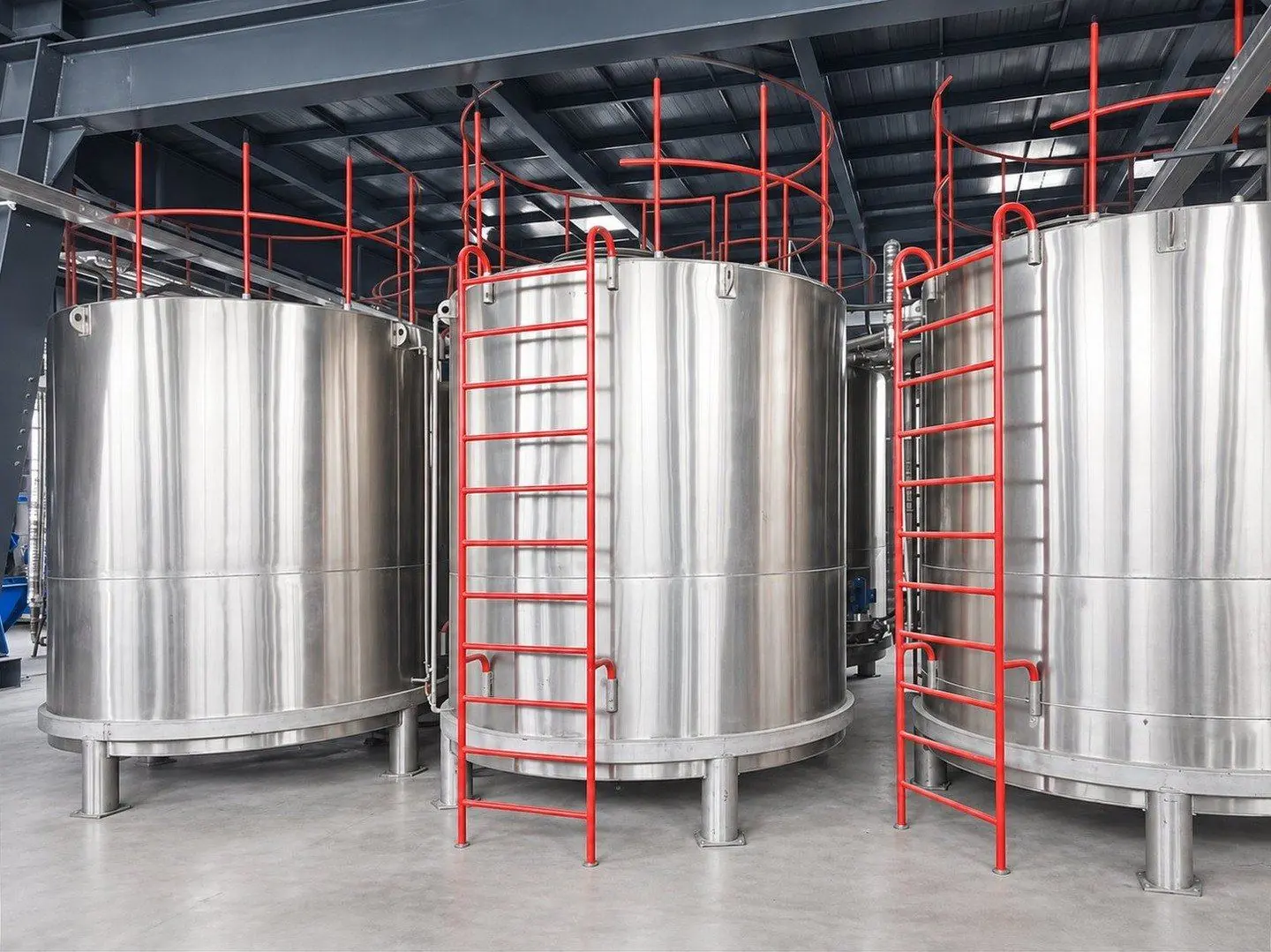
Examples: 0.4 m³ solution scale · 45 L reagent hopper on a compact stationA dilution tank with agitator and level indicator, a storage tank sized for several days, and a corrosion-resistant pump.
Example: 2 m³ dilution tank · 5 m³ storage, five days' stock at a 5 % doseVariable-speed weighing screws and rotary valves under silos and buffer hoppers. Both are made in our workshop.
Examples: weighing screw 2 t/h on a VFD · rotary valves 300 × 300 and 400 × 400 mmLoad cells from Mettler-Toledo or an equivalent brand. PLC and touch screen with recipes, alarms and batch history; automatic, semi-automatic and manual modes; DCS connection available.
Examples: 1000 kg and 500 kg load cells · Siemens S7-1500Where the ash has to stay hot and dry, scales, screws and valves get electric heat tracing and insulation.
Example: weighing screw traced to 170 °CHow accurate? A recent tender asked for fly ash within 1.5 % and reagent and water within 1 %. We size the scales, feeders and gates to the figures in your specification. For a ton or two of ash a day, a compact station can weigh by hand on a platform scale.
Questions buyers ask
We size the scales, feeders and gates to the figures in your specification. A recent tender asked for fly ash within 1.5 % and reagent and water within 1 %.
Load cells from Mettler-Toledo or an equivalent brand, and a PLC with a touch screen, for example Siemens S7-1500, with recipes, alarms, batch history and automatic, semi-automatic and manual modes.
Yes. The PLC logs every batch, and the records can be searched and exported.
Scales, screws and valves get electric heat tracing and insulation where the ash has to stay hot and dry, for example tracing to 170 °C.
No. For small plants a compact station can weigh by hand on a platform scale.
You or your process designer. We weigh and dose to that recipe; whether the product passes its test depends on the recipe and the ash.
Next step