Who provides the stabilization recipe?
You or your process designer set the chelating agent, cement and water ratios. We build the line to dose that recipe accurately, batch after batch.
Applications / Stabilization systems
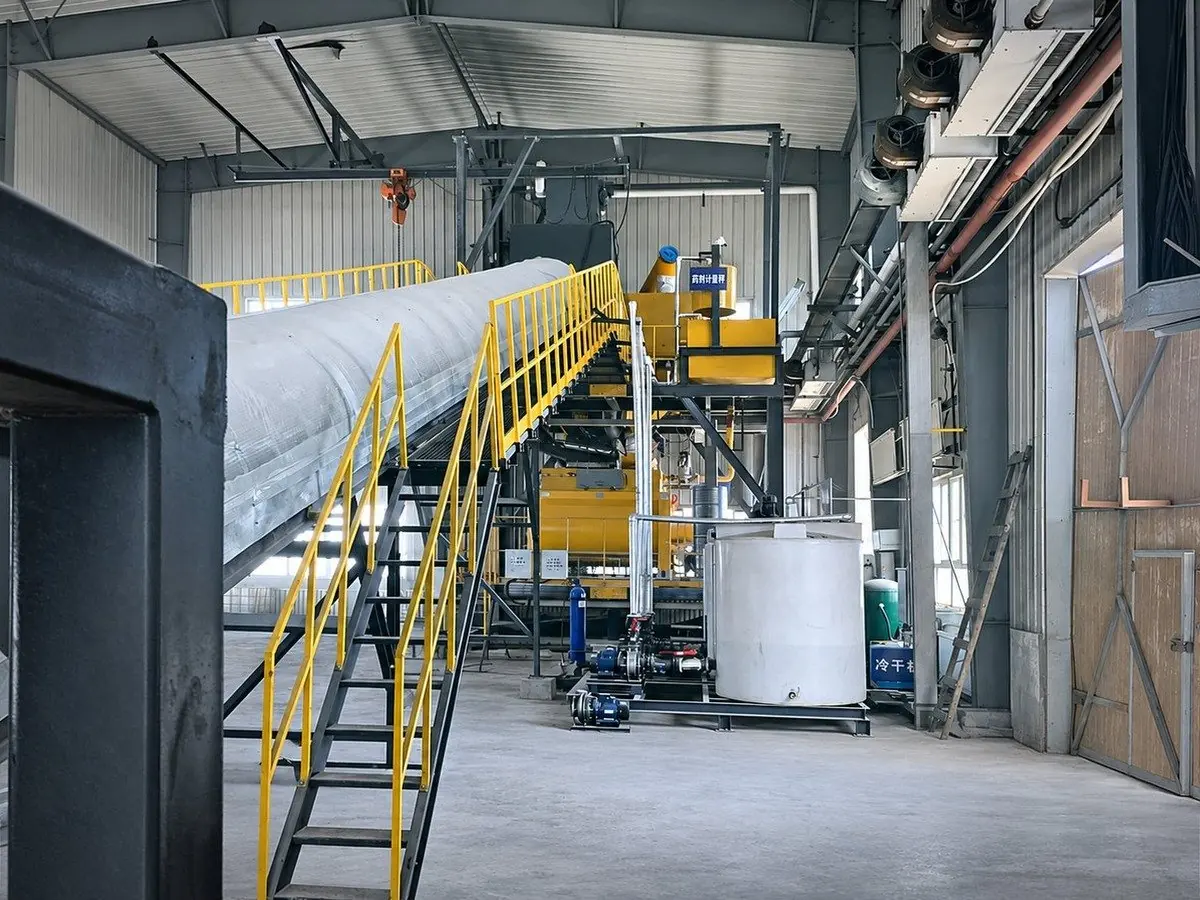
Complete lines that weigh the ash or waste, add reagent and water, mix and discharge, with dust control at each transfer point. More than 70 projects since 2019, new lines and upgrades, for waste-to-energy plants, hazardous-waste centres and county-level waste sites.
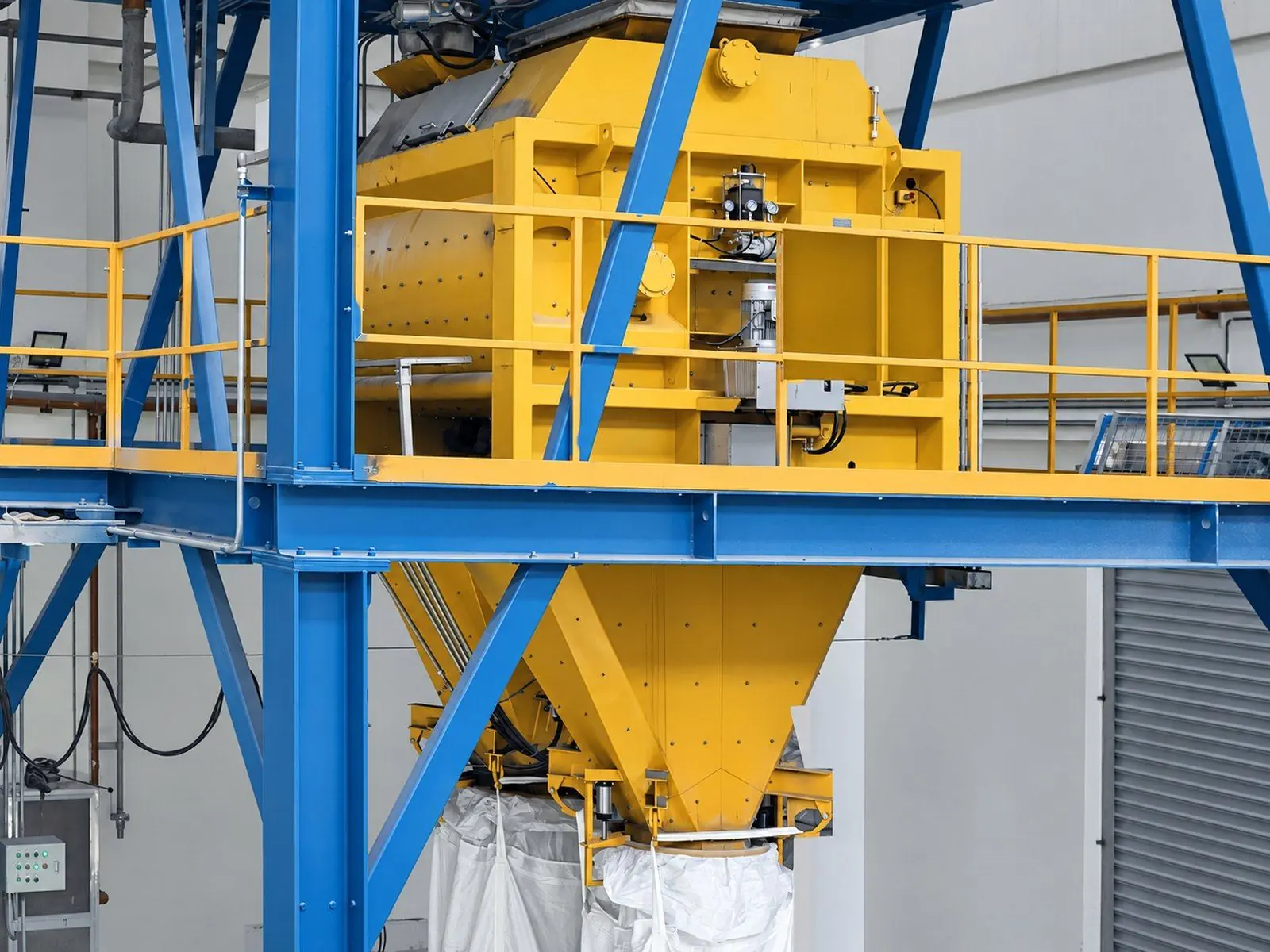
Incinerator fly ash is dusty when dry, sticky once reagent and water go in, and abrasive the whole time. A stabilization line has to weigh it accurately, mix it evenly and discharge it cleanly, batch after batch.
These are also called fly ash solidification, chelation or conditioning systems; in Europe, treatment of APC or FGT residues. Many plants wet their ash in a continuous pug mill or ash conditioner. Our lines mix in batches: each charge is weighed, mixed and discharged before the next one goes in.
The same lines also stabilize contaminated soil, river sediment and sludge.
The recipe (chelating agent, cement and water ratios) comes from you or your process designer. We build the line to dose it accurately.
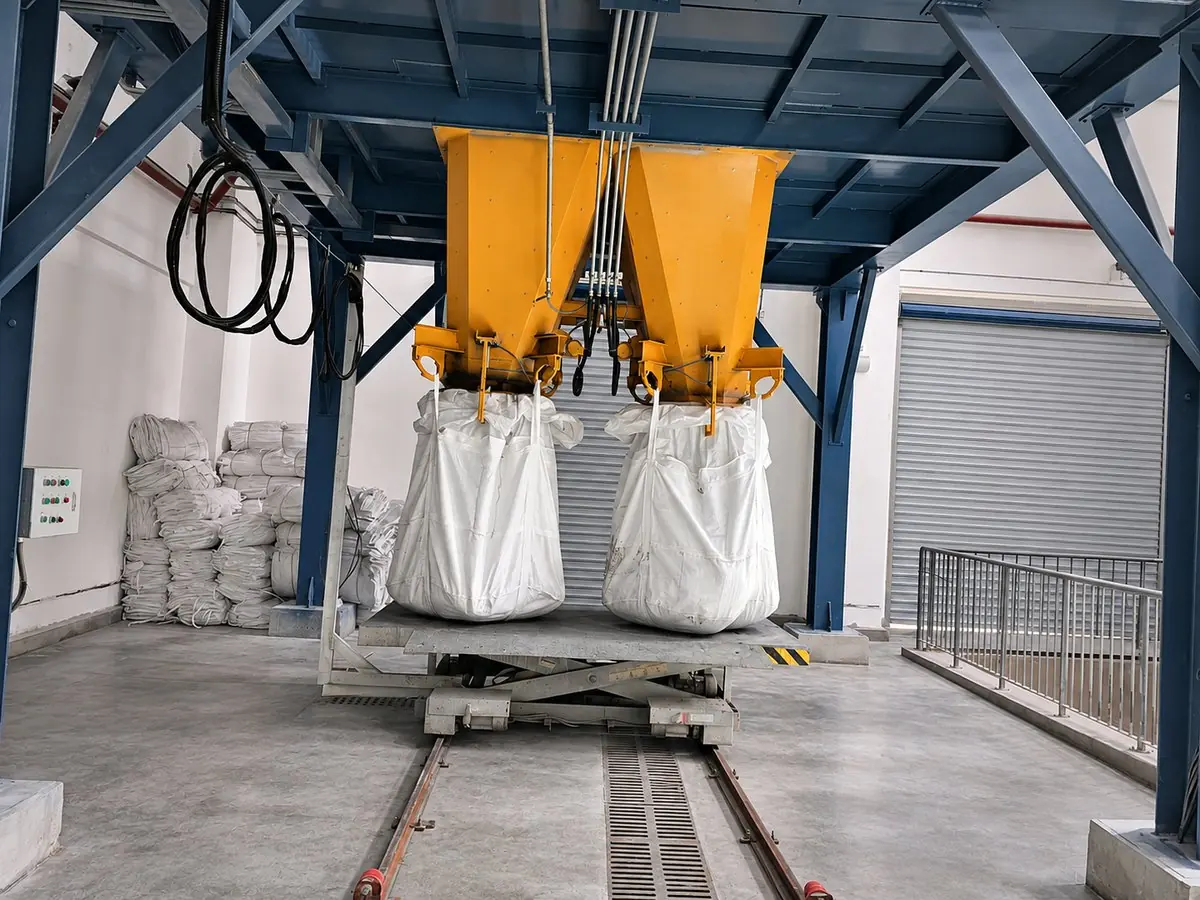
From the ash silo through a rotary valve and screw conveyor, or from bulk bags through a bag unloading station.
See conveyorsAsh weigh hopper, cement scale, reagent and water scales, each batch weighed to the recipe.
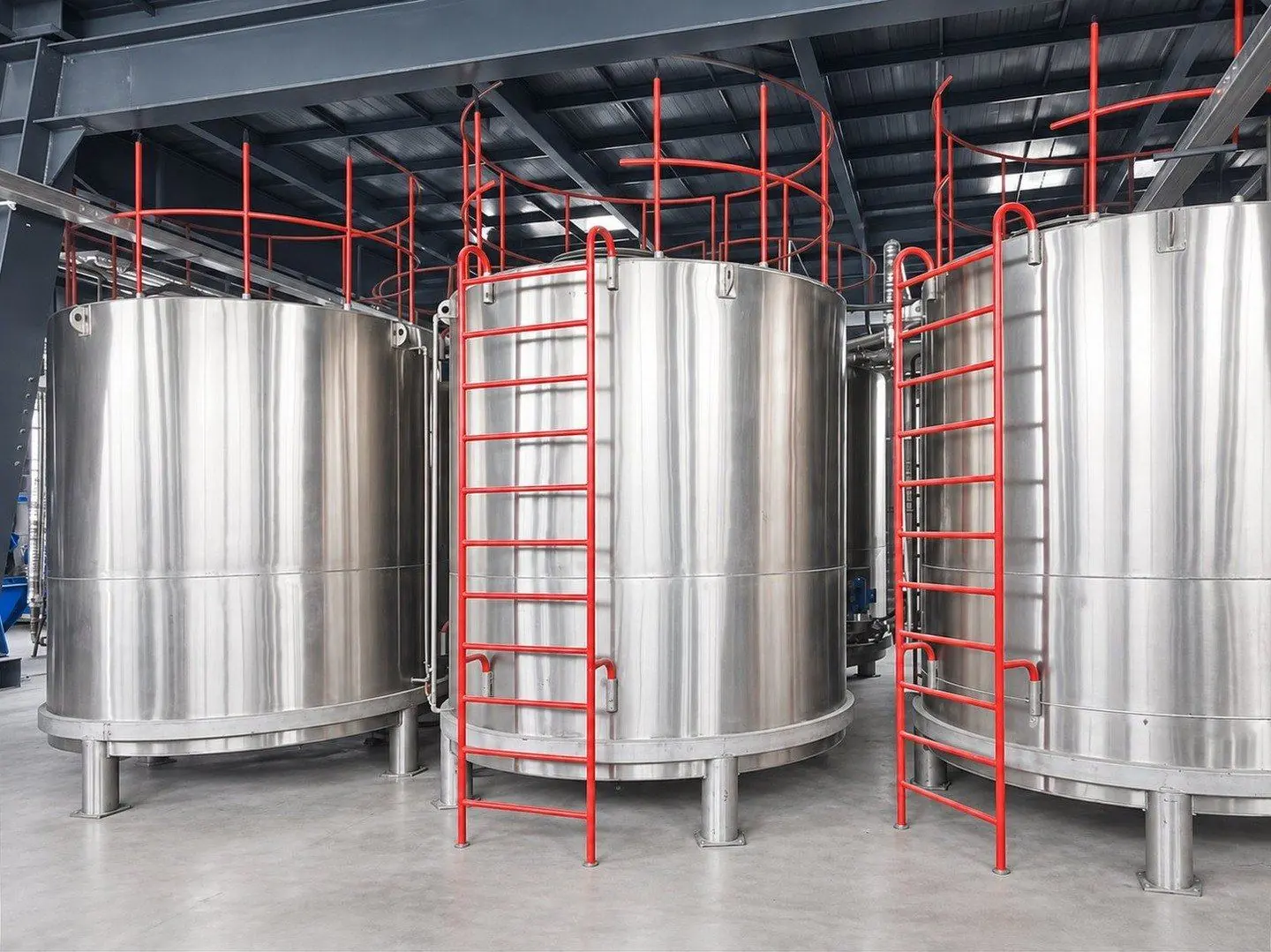
See dosing and weighingDilution tank with agitator, storage tank and transfer pump, with stainless reagent piping.
Twin-shaft batch mixer with reagent spray nozzles and wear- and corrosion-resistant liners.
See the mixersInto bulk bags, a forming machine, trucks or a conveyor, depending on where the product goes next.
Dust from the weigh hopper, mixer inlet and discharge goes to a dust collector, or to the silo-top filter.
See dust collectionPLC with a touch screen or operator station: recipes, set-points, alarms and history.
From our drawing office
General-arrangement drawings from our design office, redrawn for the web. Silos, steel, conveyor routes and dust collection are laid out around each customer’s material, rate and building.
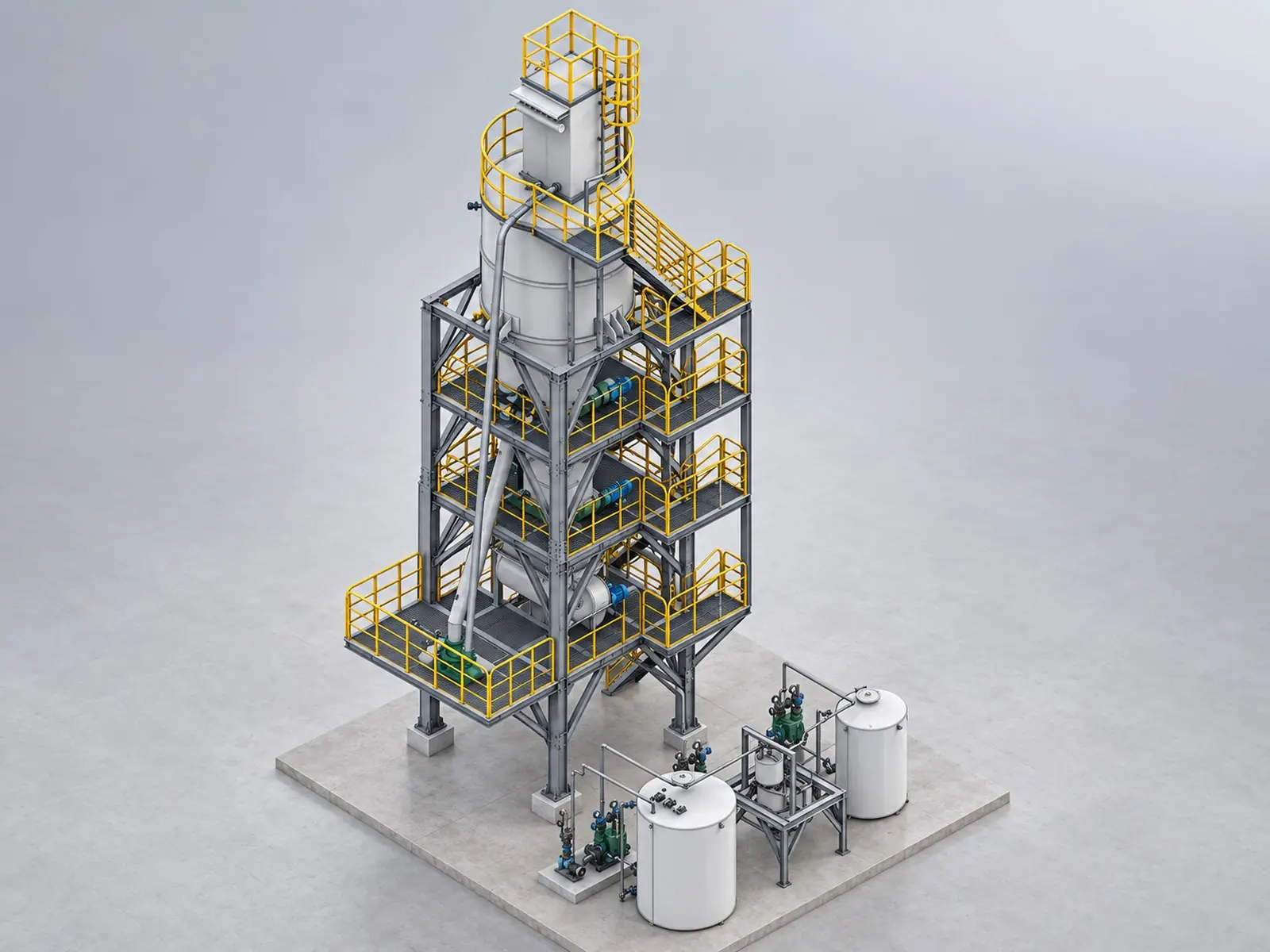
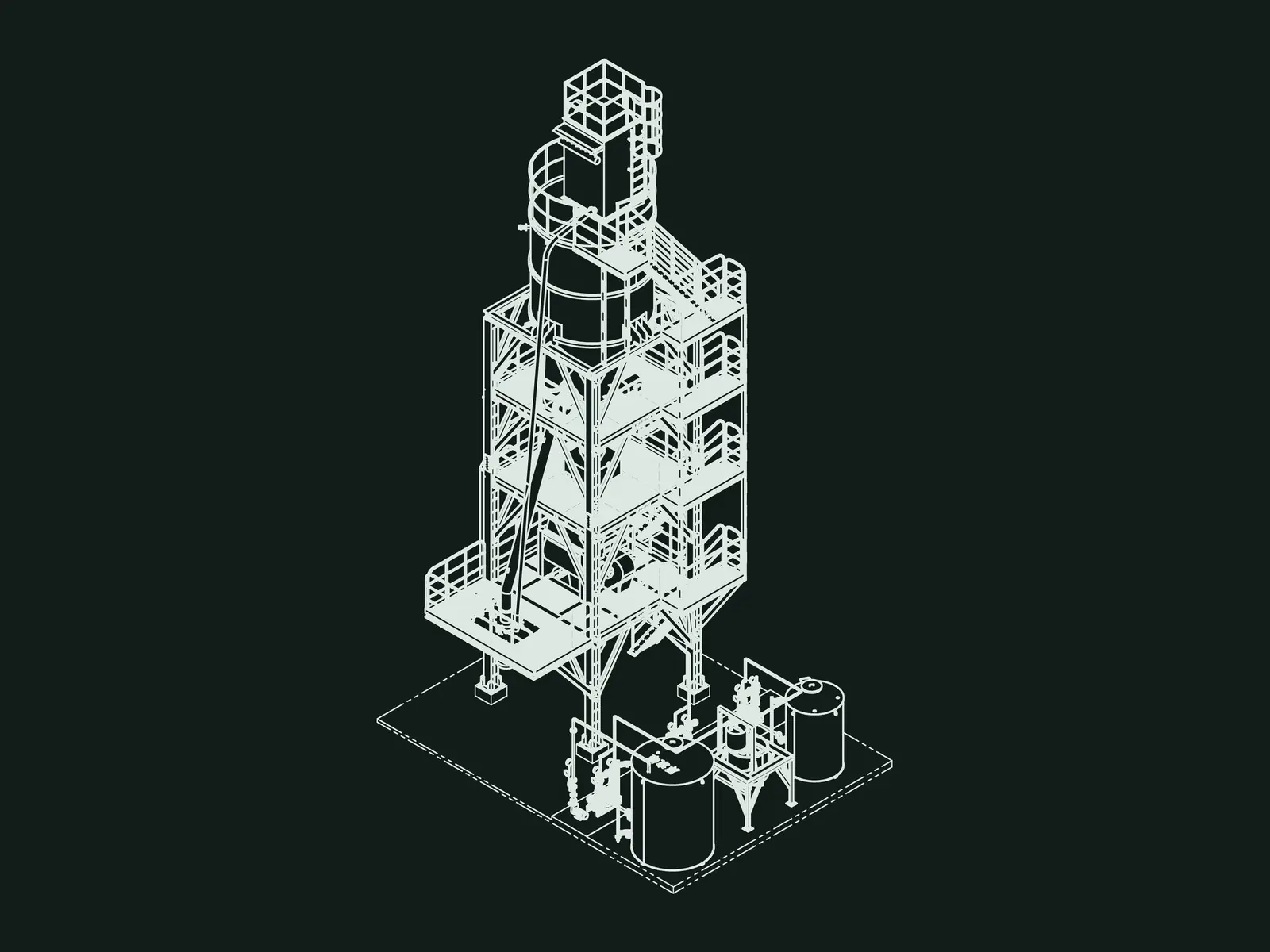
Heilongjiang, China · drawing and a rendering made from it
8.9 × 7.0 m · 18.0 m high
A 20 m³ silo over four levels on a 3.5 m square frame, a reagent skid beside it, and a bulk loader underneath.
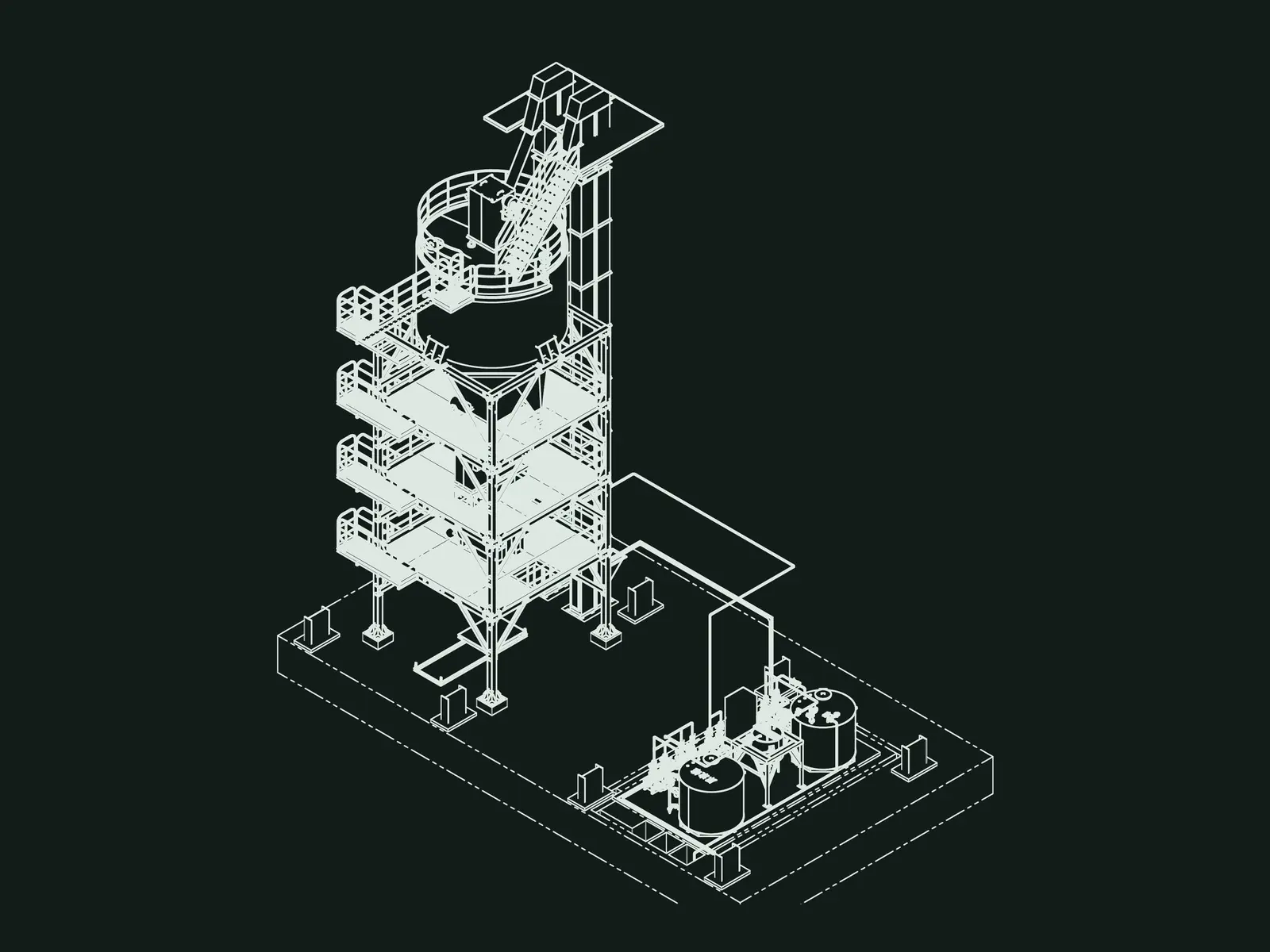
Qinghai, China · drawing
11.7 × 6.2 m · 19.5 m high
A 50 m³ silo on the tower, a tall bucket elevator, a separate reagent skid, and bagging with a bulk-bag trolley.
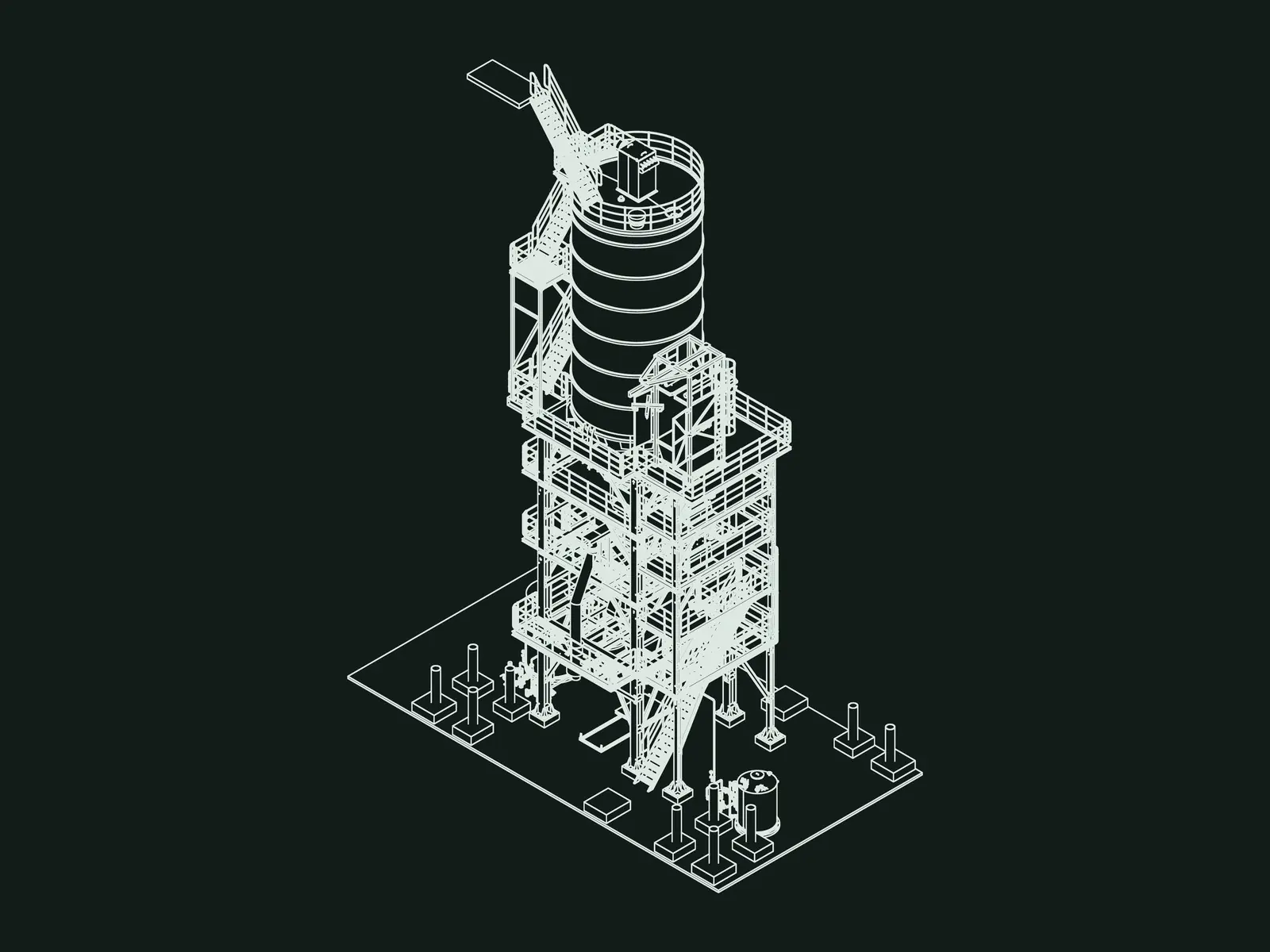
Guangxi, China · drawing
28.2 m high
The silo sits on a four-level tower. Two-stage crushing for secondary chelation, bulk loading and bagging, and a control room.
| Line | Mixer | Reference rate |
|---|---|---|
| ZSGF006 | ZKS60 | 0.2–0.5 t/h |
| ZSGF10 | ZKS1000 | 3–6 t/h |
| ZSGF15 | ZKS1500 | 5–10 t/h |
| ZSGF20 | ZKS2000 | 6–12 t/h |
| ZSGF30 | ZKS3000 | 9–18 t/h |
Catalogue figures, and on the conservative side. The real rate depends on the ash, the recipe and the batch cycle. To size a line for your plant, see the sizing guide or ask us.
On video
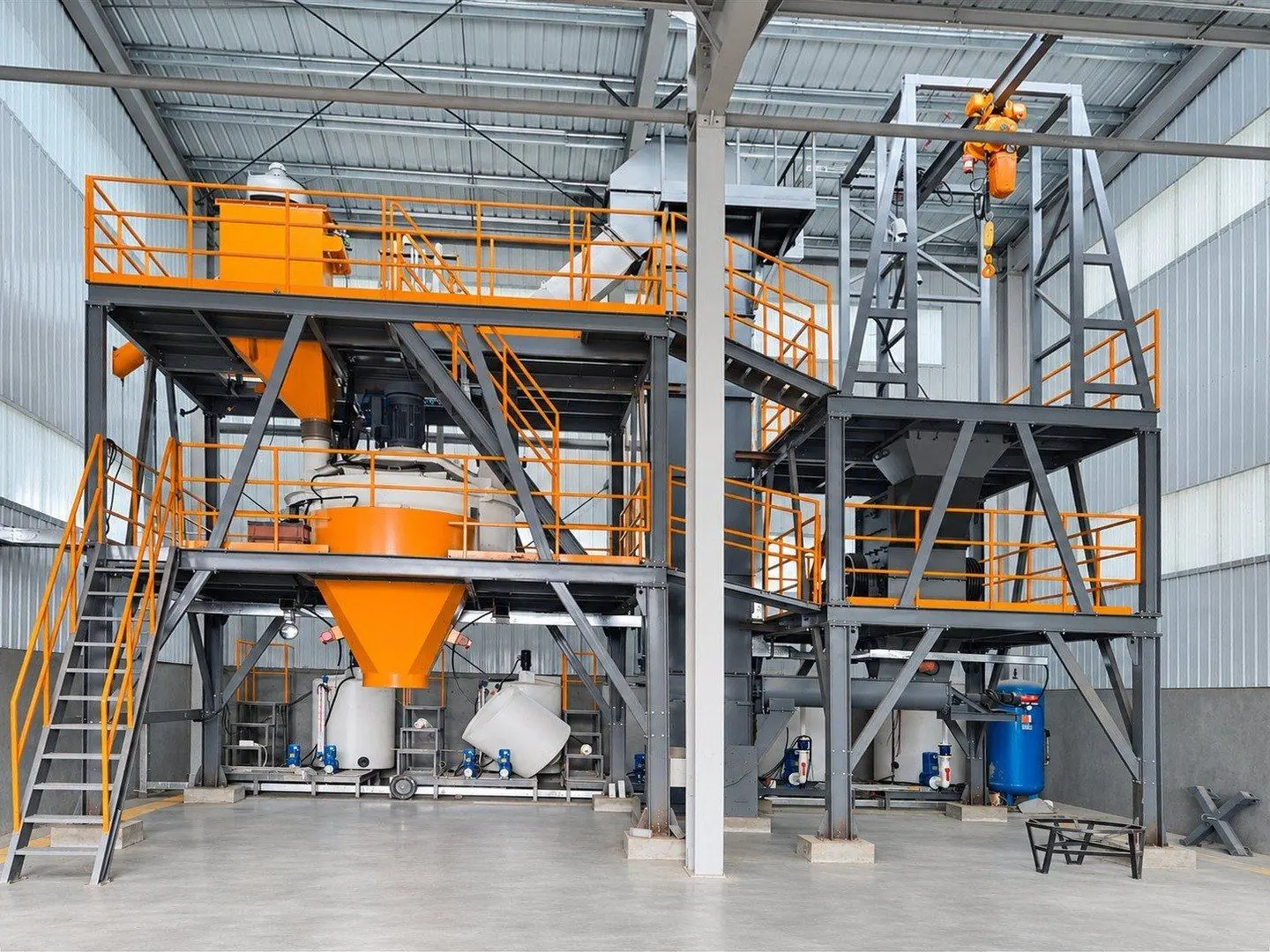
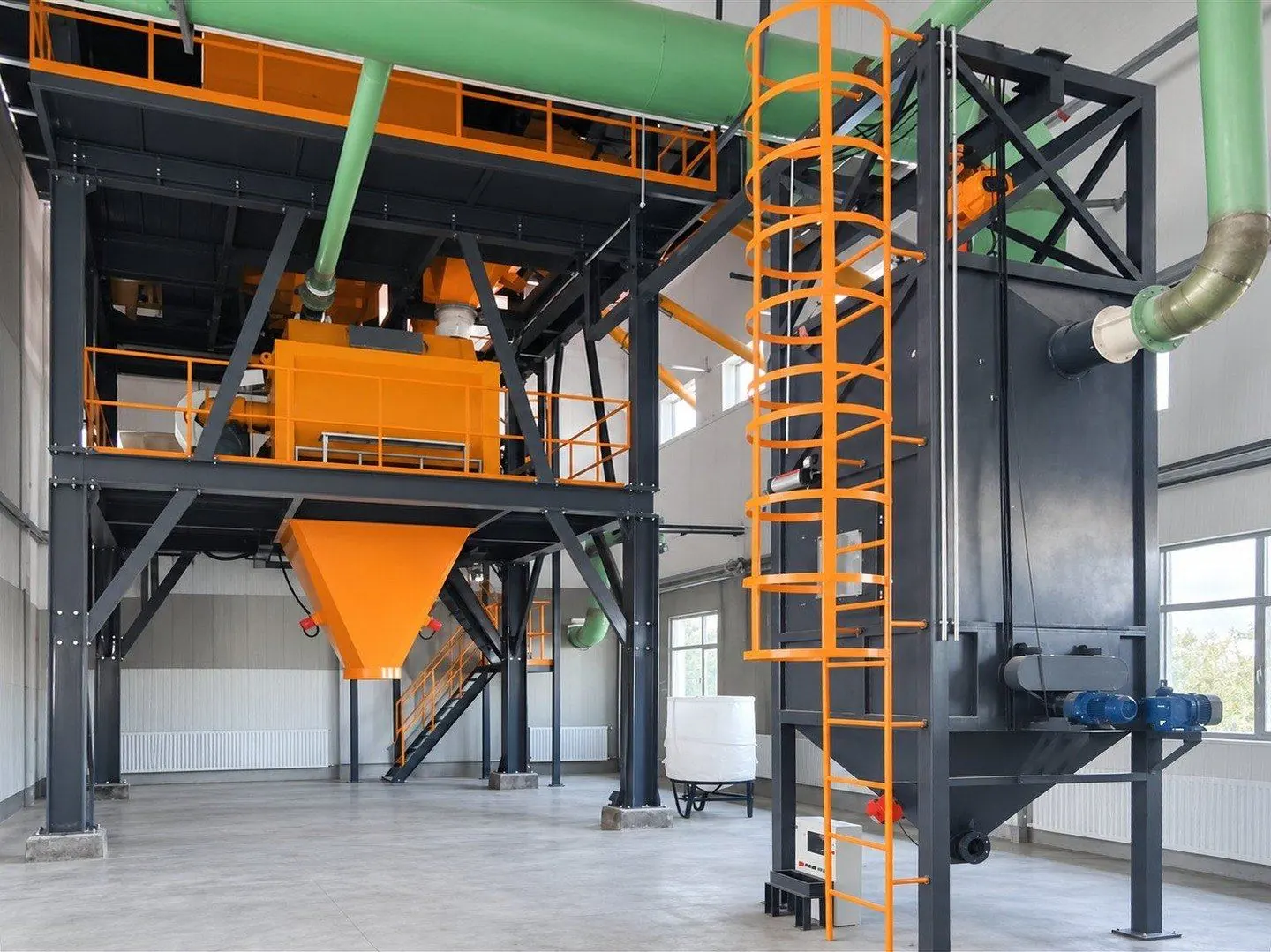
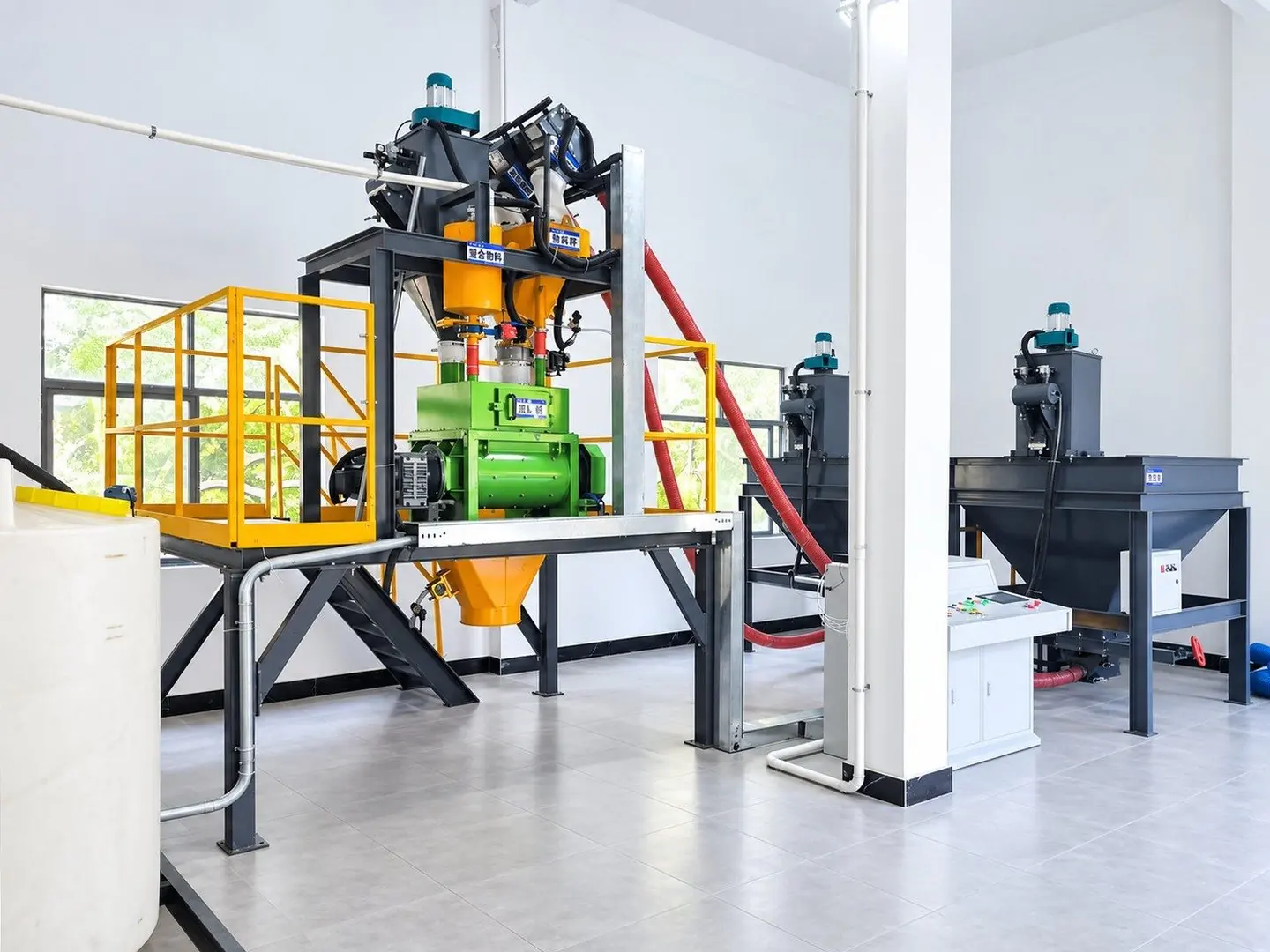
Weigh hoppers on top, the twin-shaft mixer in the middle, discharge below: one steel structure, one line.
Questions buyers ask
You or your process designer set the chelating agent, cement and water ratios. We build the line to dose that recipe accurately, batch after batch.
Our reference lines run from 0.2–0.5 t/h with a 60 L mixer up to 9–18 t/h with a 3000 L mixer. The real rate depends on the ash, the recipe and the batch cycle.
Yes. Many recent orders are upgrades: a second line beside a running one, a new mixer in an old workshop, secondary chelation added, or a line fitted under an existing ash silo.
Yes, down to a compact unit with a 150 L mixer and manual weighing, about 4 × 5 m of floor and 4.6 m high.
Yes. The same lines also stabilize contaminated soil, river sediment and sludge.
A 12-month warranty on manufacturing faults, spare parts in stock for the life of the machine, 24-hour technical support, and engineers who supervise installation, commission the equipment and train your staff on site.